


GLT
Which customers prefer round and square glass bottles respectively?
08-14-2026
As a buyer of glass bottles, you may consider purchasing round or square bottles.
Circular glass bottles are a mainstream classic in the packaging industry that has been validated by the market, and their advantages are not just retro appearance. The rounded bottle structure is highly suitable for the entire process of filling production, warehousing and transportation, with strong practicality and a balance between cost-effectiveness and user experience. It belongs to a highly versatile rigid packaging.
Square glass bottles are not a substitute for circular bottles, but an upgraded choice for segmented tracks. The sharp and straight bottle body lines are different from the uniform round bottle design on the market. It has a larger label display surface, higher space utilization, and comes with a simple and high-end texture, which is very suitable for creating a high-end positioning of products and raising product premiums.
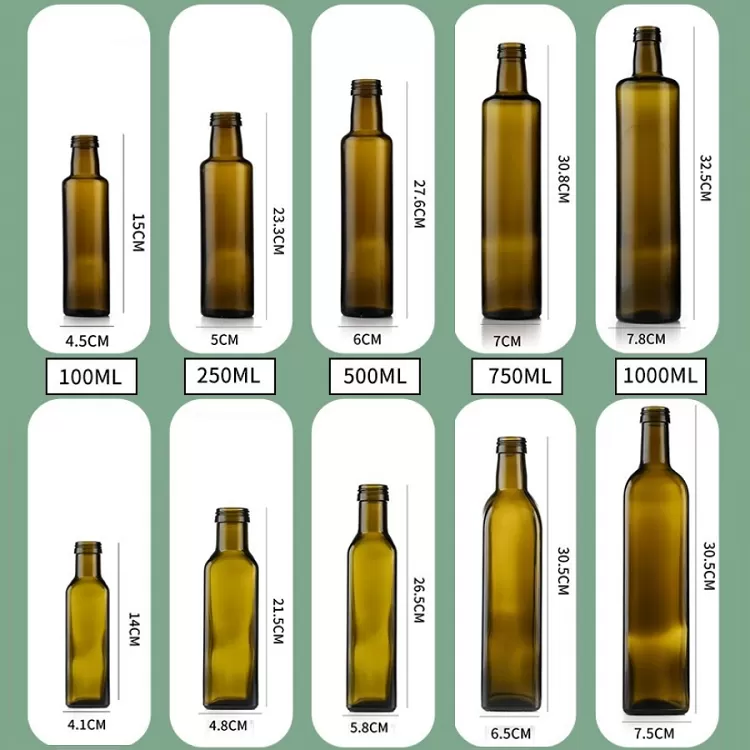
Based on actual foreign trade procurement scenarios, the selection tendencies of different customers can be summarized as follows:
Food processing enterprises: prioritize circular standard bottles, value filling adaptability, sealing effect, and supply stability
Honey brand: available in round bottles, square bottles, and hexagonal cans, with a focus on natural texture, shelf display effect, and gift attributes.
Jam sauce brands: Choose round and wide mouthed jars, with a focus on convenience of use, label sticking, and filling efficiency
Olive oil brands: There is a demand for round bottles, square bottles, and flat square bottles, and the choice is made based on brand positioning, oil pouring experience, and offline display effect.
Beverage brand: mainly round bottles, some may choose special shaped bottles, focusing on grip, filling process, and brand recognition
Premium food brands: prefer square or specially shaped bottles, pursue differentiated appearance.
Distributors and wholesalers: More accepting of standard round bottles, emphasizing universality and inventory turnover efficiency
Gift packaging customers: tend to prefer square and distinctive bottle shapes, value visual expression and decorative effects.
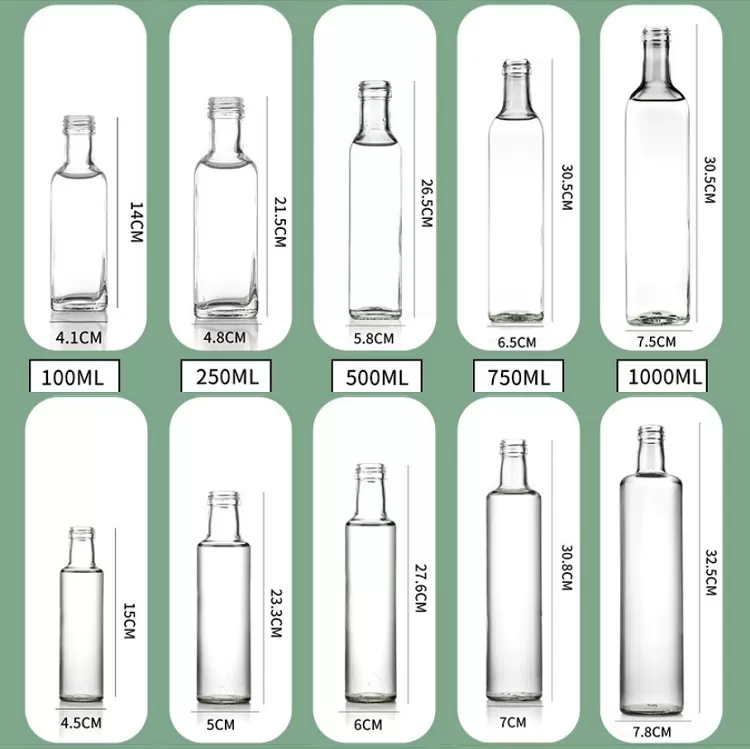
The above is only a general market trend and not a rigid standard. The same product, honey, is a typical example, which can be used in both round and square bottles.
Honey, which is aimed at mass supermarkets and focuses on daily household consumption, can be packaged in regular round jars or wide mouthed glass bottles to meet the packaging needs. For high-end and gift oriented specialty honey, most brands will choose square bottles, thick bottomed bottles, hexagonal cans, matched with special bottle caps, hot stamping logos, and customized labels to make gift box sets. At this point, glass bottles are no longer just containers, but also play a role in shaping brand image and supporting product pricing.
The choice of bottle type is largely influenced by sales channels, and brands need to first clarify their positioning: to be a popular daily consumer product, or to focus on gift attributes and pursue brand premium products. Different positioning will result in different packaging solutions.
There is often a misconception in the packaging industry that the more complex the design, the higher the packaging grade.
But for a glass bottle with excellent commercial value, it is necessary to simultaneously consider the needs of three parties: consumers are willing to pay when they see it; The brand owner can fully showcase the brand design; The procurement and production end can ensure stable supply and smooth production.
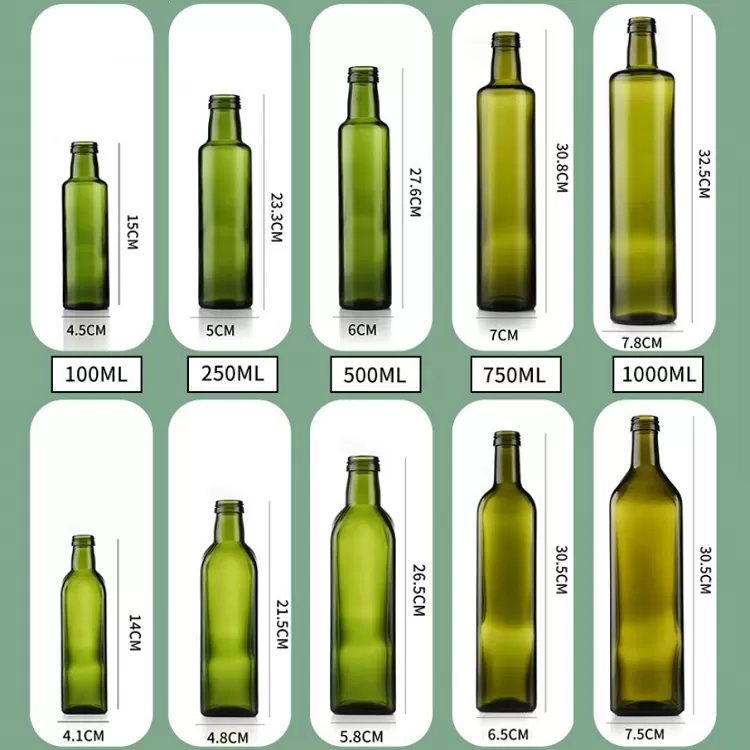
Summary of selection ideas: Emphasize universality, production maturity, and wide adaptability to various scenarios, and prioritize the selection of circular glass bottles; Emphasize brand recognition, label display effect, and boutique retail appearance, and prioritize square or structurally stronger bottle shapes.
For B-end procurement projects, it is recommended to comprehensively compare samples, capacity dimensions, bottle mouth specifications, matching bottle caps, surface decoration processes, packing quantities, and production line compatibility before determining the plan.
Customers never purchase a single bottle, but a complete glass packaging solution that combines multiple dimensions such as appearance, practicality, transportation, and cost to select the bottle type that truly suits the product.