


GLT
Is a thicker bottle wall safer? Two accounts for thickness and pressure resistance
11-25-2026
In the eyes of everyone, it is believed that the thicker the wall of a glass bottle, the stronger the bottle, especially when it comes to canned carbonated beverages and beer. Choosing a glass bottle with a thicker wall is more reassuring. This judgment cannot be said to be wrong, because he only calculated half of the security account, and the other half was missing. The other half is the thermal stress, molding defects, and weight cost caused by thick walls.
You should know that the pressure resistance of glass bottles is never solely determined by their thickness. When glass bottles are cooled during molding, they shrink from the outer layer first and then from the inner layer. The thicker the wall, the greater the temperature difference between the inside and outside of the bottle, and the residual thermal stress is difficult to completely eliminate during annealing. This precisely indicates that such bottles are more likely to crack. Especially during the process of canned hot water and spray sterilization, the more concentrated heat shock actually increases the risk of bottle breakage. In one case, uneven distribution of glass liquid may occur in the transition area between the bottom and shoulder of the bottle due to thick walls, which increases the probability of bubble cold lines appearing.
This is the main reason why the industry has been promoting lightweight glass bottles. Lightweight is not simply about thinning the walls of glass bottles, but about moving the non load bearing parts of the glass bottle material to the load bearing parts. GLT glass bottles are a professional manufacturer of glass bottles. By optimizing bottle shapes, improving wall thickness tolerance control, and improving annealing curves, thin-walled bottles can also pass water pressure blasting and vertical load testing. But conversely, if we only focus on the thickness of the glass bottle, the bottle will become heavier, the shipping cost for customers will also increase, and the burden of recycling and cleaning will also increase.
For professional glass bottle manufacturers, what is more worth paying attention to is the thinnest part of a bottle, which is its true pressure resistance weakness. Only online thickness measurement, infrared detection, and blasting sampling can better detect problems than simply increasing weight. For consumers, thickness does not equal stability, uniformity and craftsmanship are the key, don’t take consumers for fools.
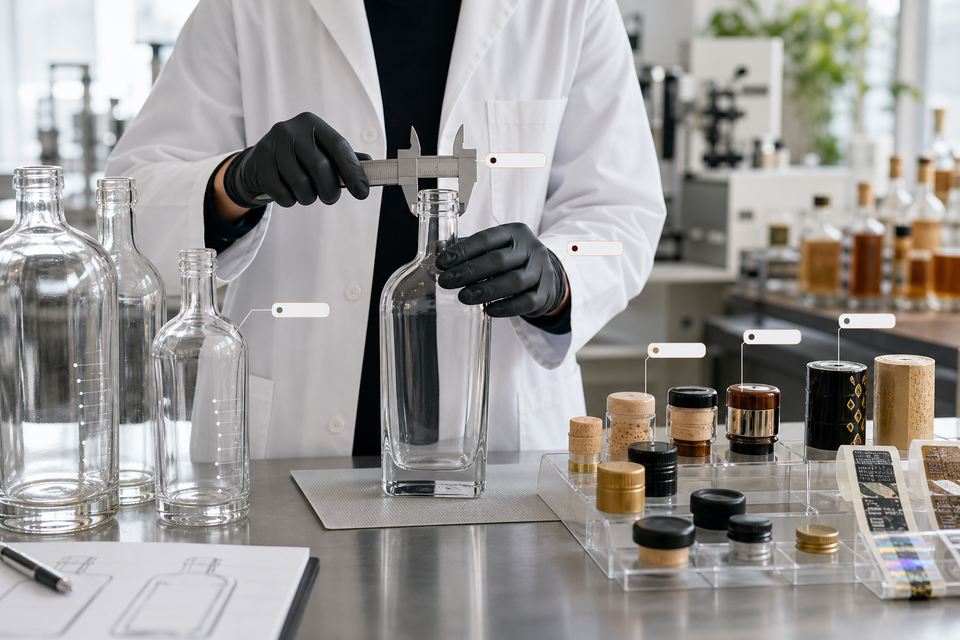
GLT glass bottles will use thickness in areas that require thickness, such as large capacity glass bottles that require high rigidity. Only by controlling the stress can we provide customers with better glass bottles. If you have a need for glass bottles, please feel free to contact us at any time.