


GLT
How to Buy Mini Bottles in Bulk: A Procurement Guide for Packaging, Compliance, and Supplier Risk
06-03-2026
How to Buy Mini Bottles in Bulk: A Procurement Guide for Packaging, Compliance, and Supplier Risk
Buying Mini Bottles in bulk can look simple, but pricing, case packs, shipping limits, licensing, breakage, and substitutions often change the real cost. Start with your commercial use case, then source around size, compliance, delivered cost, and supplier reliability-not the lowest unit price alone. This guide walks through the procurement process from program planning and bottle-size selection to sourcing channels, cost modeling, compliance checks, supplier comparison, inventory planning, stock inspection, and practical uses such as sampling, training, and upsells.
Prerequisites: Define Your Mini Bottle Program Before You Source
Prerequisites: Define Your Mini Bottle Program Before You Source
Before you contact a supplier, answer one question: What is this program for?
Mini Bottles are not a commodity category. A retailer sourcing 50ml mini liquor bottles for shelf resale has different compliance, margin, and case-quantity requirements than a hotel stocking minibars. An event planner building a 500-person wedding activation has different needs again. When you request quotes before defining the use case, you increase the risk of choosing the wrong sizes, non-resalable SKUs, or fulfillment terms that break down in daily operations.
Step 1: Name Your Use Case Before You Name a Budget
What: Identify the use case that describes your program: resale, minibar stocking, tasting flights, corporate gifting, event service, airline service, subscription boxes, sampling kits, staff training, or “try before you buy” SKU evaluation.
Why: Each use case affects the sourcing channel, required certifications, minimum order quantities, and label requirements. A 50ml bottle sold at retail in the U.S. needs TTB-compliant labeling and state distribution approval. The same bottle used as a branded gift at a private event may follow a different compliance path.
How: Write one clear sentence: “We are buying [X size] mini bottles for [use case], to be [resold / distributed / consumed on-premises], in [region], starting with [quantity] units.” That sentence filters out wrong-fit supplier conversations before they start.
Step 2: Build a One-Page Procurement Brief
Once the use case is clear, turn it into a one-page brief for purchasing, operations, legal, and customer experience. A shared document keeps teams aligned on resale status, storage limits, labeling needs, and reorder timing before supplier outreach begins.
Include these core program details:
- Buyer type – retailer, hotel, airline, event planner, or subscription business
- Intended use – resale, on-premise consumption, gifting, sampling, or training
- Resale status – sold, distributed, or consumed
- Required sizes – 50ml, 100ml, 200ml, or 375ml
- Target brands or categories
- Order frequency and reorder cadence
- Delivery region and storage capacity
- Budget range – per unit and per order
- Labeling needs – custom label, private label, or standard brand label
These details matter because sizes are not interchangeable. A 50ml bottle works for a standard single-serve pour. A 100ml bottle changes tasting-flight cost-per-serving math. A 200ml or 375ml format affects storage, portioning, and compliance requirements.
Pro tip: Ask finance, operations, legal/compliance, and customer experience to review the brief before supplier outreach. A supplier can look right to purchasing and still fail in execution. Storage limits or regional compliance rules may surface only two weeks before delivery.
Step 3: Understand the Real Cost of “Cheapest”
Many buyers learn this late: the lowest unit price often creates the highest program cost.
Consider a hotel purchasing 50ml mini spirits for minibar stocking. A supplier offering a $0.30 lower unit cost looks attractive on a purchase order. That savings can disappear if the supplier ships mixed cases, blocks individual SKU reorders, requires a 500-case minimum, or uses thin glass that drives a 4-6% breakage rate in transit. Add longer shipping distances and stockout losses when popular SKUs sell out mid-month, and the landed cost per usable bottle climbs fast.
The true cost formula includes:
- Unit price plus freight per unit
- Breakage rate multiplied by replacement cost
- Compliance risk from mislabeled or non-compliant bottles
- Mixed-case restrictions that force over-ordering of slow-moving SKUs
- Fulfillment friction from lead times, reorder minimums, and returns policies
A supplier charging 15% more per unit may still deliver a lower true landed cost. Single-SKU cases, a 99% fill rate, and compliant labels can be worth more than the lowest quoted price.
Common Mistakes to Avoid
- Sorting by unit price first. Price is one variable in a multi-variable equation. Start with use case, compliance, fulfillment fit, and landed cost.
- Using “mini bottles” as a size. The term covers several formats. A 50ml bottle holds one standard shot, a 100ml bottle holds two, and a 200ml bottle is closer to a half-pint. Each size changes portioning, storage, and cost.
- Treating all use cases as equivalent. Mini liquor bottles, shot-sized bottles, empty miniature bottles, 375ml bottles, and decorative craft bottles are different product categories. They often require different sourcing channels, MOQs, and compliance paths.
- Skipping the internal brief. Verbal alignment with one stakeholder is not a program definition. A written brief puts constraints on the table before you select a supplier.
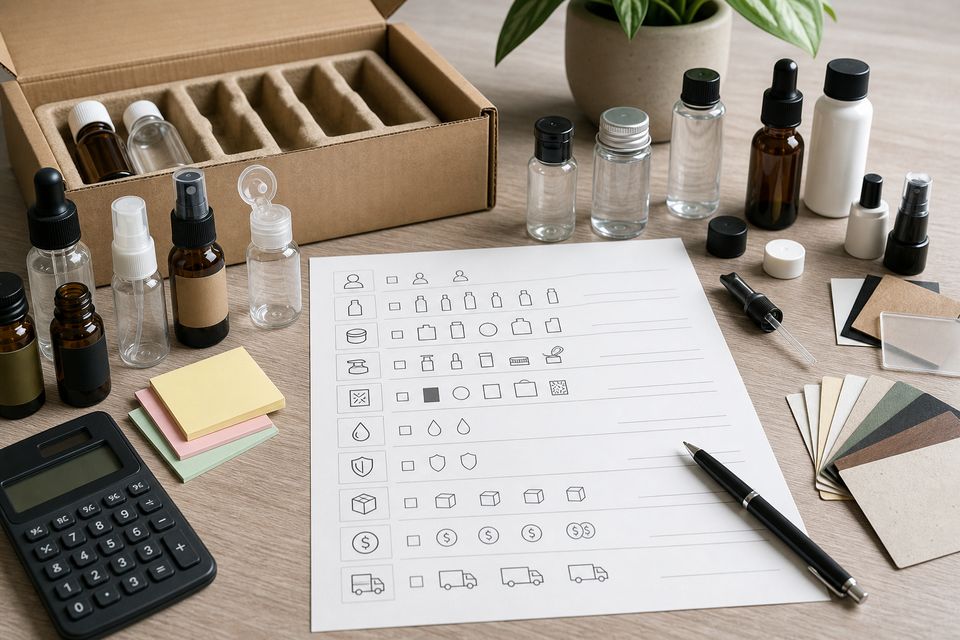
Template suggestion: Create a downloadable one-page procurement brief or screenshot of a completed sourcing checklist. Use three columns – hotel minibar program, retail resale program, and event activation – to show how the same Mini Bottles category can require different procurement parameters. This checklist becomes the anchor for every supplier conversation that follows.
Step 1 – Choose The Right Mini Bottle Size For Your Commercial Use Case

Step 1 – Choose the Right Mini Bottle Size for Your Commercial Use Case
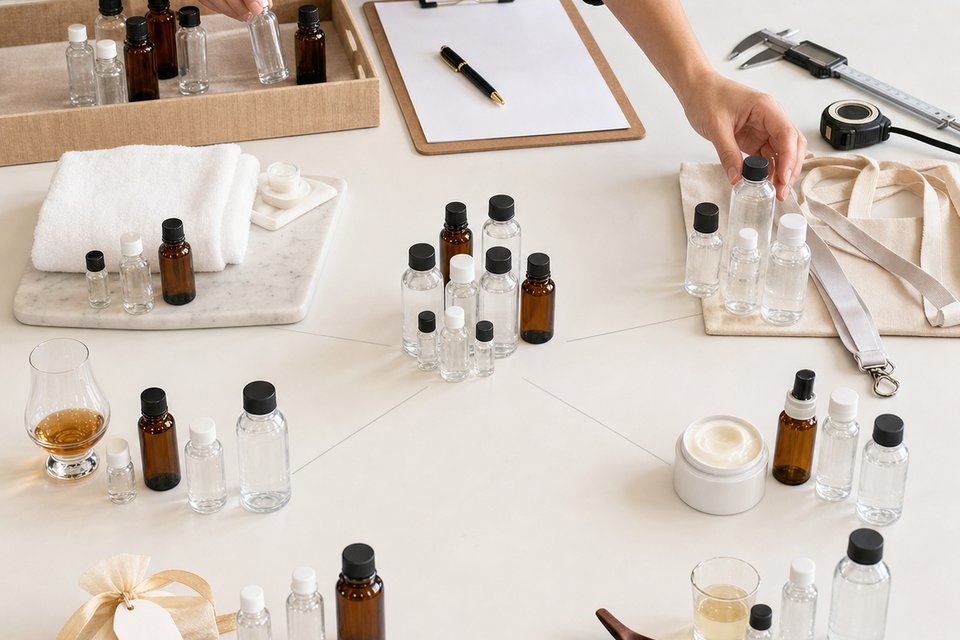
The right mini bottle size is more than a packaging preference. It is a unit economics decision. The wrong format can create margin pressure, weaken portion control, complicate compliance, or leave guests feeling shortchanged.
Start by matching Mini Bottles to how your business serves, prices, stores, and reorders product. The right size should support your service model first, then your branding and presentation goals.
The Core Size Options and What They Deliver
*Cost per serving varies by category, supplier, and order volume. Use these ratios for internal planning, then validate them against your distributor or manufacturer quote.
How to Match Size to Your Operation
50ml is the default for spirits sampling, airline-style service, and settings where portion control matters. At roughly 1.7 oz, it covers a standard single shot in many markets. Hotels, tasting events, and subscription boxes use this format because it limits over-service, simplifies inventory counts, and ships in high case quantities. Most cases contain 120+ units, making 50ml practical for high-volume programs with frequent turns.
100ml fits programs where guests expect more than one pour. Premium tasting kits, cocktail starter sets, and gift programs use this size to signal more value without moving to a 375ml bottle. Since each unit provides two standard spirit pours, a tasting event for 50 guests needs 25 bottles instead of 50. That can reduce reorder frequency compared with 50ml formats.
200ml works best in retail-adjacent settings. Use it for minibars with a value-per-room target, travel retail where perceived value drives impulse purchases, or corporate gifting where the bottle needs more presence. Case yields usually drop to 24-48 units. At that point, storage, picking, and back-of-house handling become more important at scale.
Wine and RTD formats need separate serving math. A 187ml wine split is typically treated as a single glass. Ready-to-drink formats also need category-specific calculations based on ABV, guest expectation, and channel.
The Planning Calculation Buyers Skip
Before placing an order, run a three-part check:
- Pours per event or room night – How many servings does one unit deliver?
- Case yield vs. demand – Does the case count fit your weekly, monthly, or seasonal reorder cycle?
- Storage footprint – Does the format fit your available back-of-house space at full order volume?
A 144-unit case of 50ml bottles can occupy similar shelf space as a 24-unit case of 200ml bottles. Smaller formats save liquid volume per unit, but they do not always save space at scale.
For example, a hotel stocking 80 minibars twice a week needs 160 units per cycle. At 144 units per case for 50ml bottles, that is just over one case per reorder. The cycle stays clean and manageable. Moving to 200ml reduces unit count, but each case takes more cubic space. That shift changes back-of-house planning.
Common Mistakes to Avoid
- Treating all Mini Bottles as interchangeable. A 50ml spirit bottle, a 187ml wine split, and a 200ml RTD serve different business functions. A 187ml wine split is one serving, not a three-pour unit.
- Ordering by unit count instead of case yield. Suppliers price and ship by the case. If demand does not align with standard case quantities, you may over-order or pay more for partial cases.
- Using consumer size language without converting it into operating math. “Mini,” “split,” and “small-format” only help once you translate them into servings, margins, storage needs, and reorder quantities.
- Overlooking compliance by format. Some states and countries regulate mini bottle sizes for on-premise and off-premise sale. Confirm the format fits your channel before committing to bulk inventory.
Pro tip:
- For spirits, 50ml ≈ 1.7 oz ≈ one standard pour in the US and many international markets. This makes it the safest default for tasting programs, airline service, and events where over-service creates risk.
- For wine and RTD, use format-specific serving math. A 187ml wine split is one glass. A 200ml RTD may be one or two servings, depending on ABV and category norms.
- When comparing supplier quotes, normalize everything to cost per serving, not cost per unit. A 50ml bottle at $2.50 and a 100ml bottle at $4.00 look close on a price sheet. If the 100ml bottle delivers two servings, it is 20% cheaper per pour.
Time to complete this step: 30-60 minutes. Audit your serving model, ask your distributor which case sizes are available, and compare cost per serving against your reorder cycle.
Step 2 – Map The Best Sourcing Channel By Buyer Type

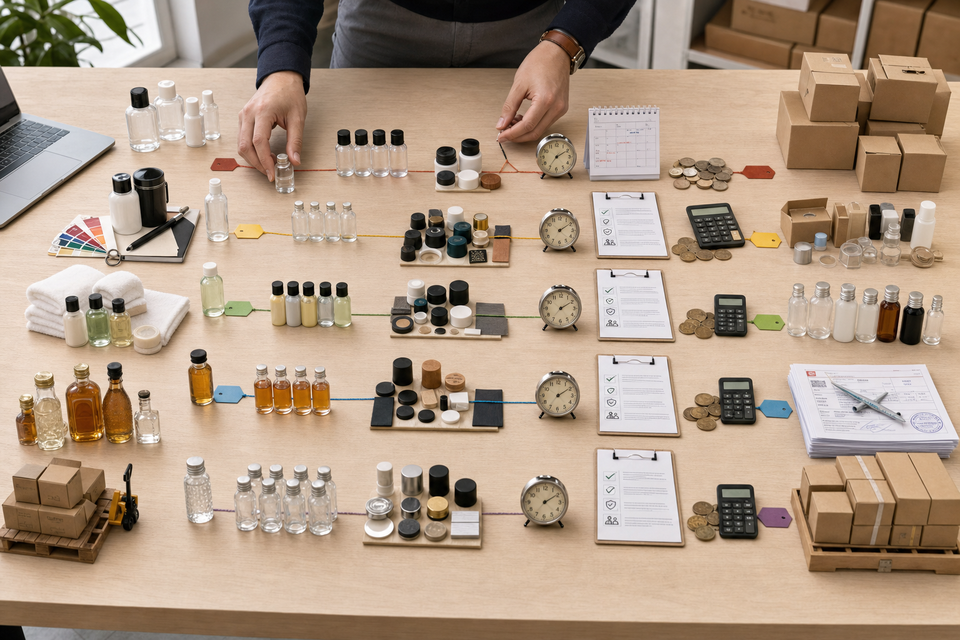
Don’t ask where to buy Mini Bottles. Ask which sourcing model fits your business.
That reframe matters because each buyer type carries different risks. A channel that works for a one-time corporate event can fail a hotel chain running a recurring minibar program. A marketplace with attractive pricing may lack legal shipping coverage in your state. It may also fall short on resale documentation, account terms, or mixed-case flexibility for a subscription box.
Use the sourcing map below before you place an order.
Match Your Channel to Your Business Model
Each sourcing channel performs differently across five decision criteria: minimum order quantity, licensing requirements, delivery area, recurring supply, and compliance support. Compare your requirements against all five before committing to a supplier.
How to Evaluate Each Channel
Start with license and resale status. Confirm whether your Mini Bottles purchase is for internal use, resale, or gifting. Each use case can trigger different tax treatment and supplier documentation. Then compare minimum order quantities against your actual usage. A 10-case minimum may look manageable until you need six different SKUs. Ask whether mixed-case orders count toward the minimum.
Next, verify delivery area and regional rules. Alcohol shipping laws vary by state and country. A supplier with strong pricing in California may lack legal shipping coverage in Pennsylvania, where state-controlled distribution applies. For ongoing programs, ask whether the supplier can hold allocated inventory, define substitute SKU rules, and notify you before allocations change.
Finally, review payment and account terms. Consumer marketplaces typically require prepayment. Wholesale distributors and direct brand programs may extend net-30 terms to qualified buyers. At volume, that can make a material cash-flow difference. The right sourcing channel should match your order size, compliance needs, delivery region, and replenishment schedule.
Common Mistakes to Avoid
Buying through consumer platforms for commercial resale. Online liquor marketplaces and consumer retailers may serve retail buyers well. They are not always built for B2B resale. Before using one as a supply source, verify licensing, tax treatment, resale documentation, and regional shipping legality.
Treating price as proof of availability. A supplier quoting $0.85 per unit on 50ml bottles may only have 2,000 units in stock. For recurring programs, confirm replenishment cycles before you build that price into a client proposal.
Pro Tip for Recurring Programs
Before you finalize a supplier, ask four direct questions:
- Can you reserve inventory between my monthly orders?
- What is your substitute SKU policy if a brand goes on allocation?
- Do you support scheduled replenishment, or is each order placed ad hoc?
- How much lead time do you need if my volume increases 30%?
A supplier that answers all four with clear terms is built for B2B. One that deflects or defaults to “contact us” is likely built for retail.
Step 3 – Calculate True Landed Cost And Unit Economics
Step 3 – Calculate True Landed Cost And Unit Economics
Most buyers compare a 50ml mini to a 750ml bottle on cost per ounce and stop there. That shortcut misses the operational value Mini Bottles can deliver. It can also eliminate programs that may be profitable through portion control, premium sampling, giftability, or full-bottle conversion.
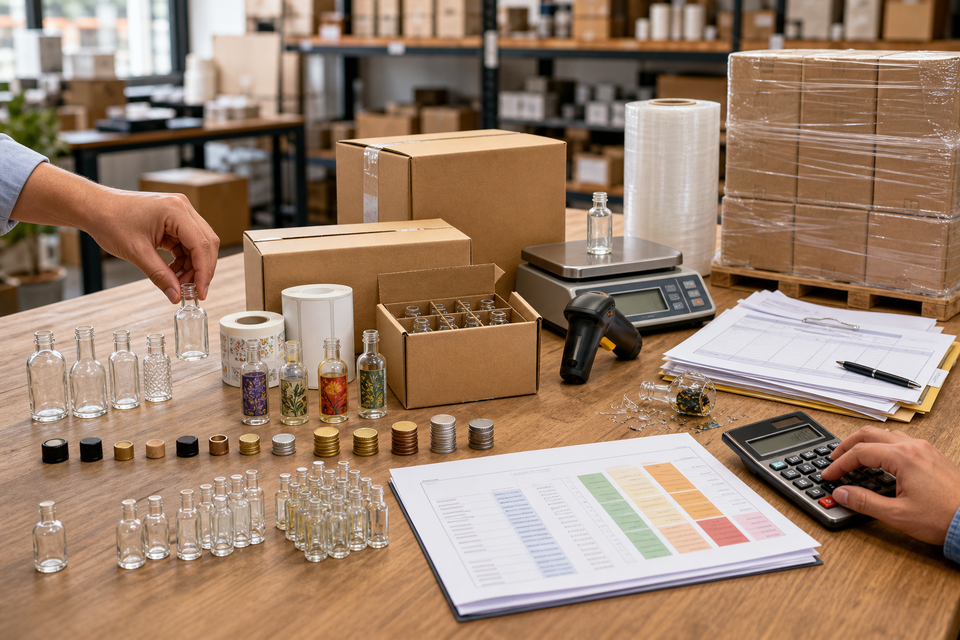
Build a full landed cost model before you decide.
Start with the bottle price, then add every cost driver that affects margin. Your model should include:
- Product cost per bottle and per case
- Case pack and total units available for sale or sampling
- Freight and handling per case, door to door
- Excise tax calculated per proof-gallon, not per bottle
- Distributor or supplier fees, including minimums, restocking, or mixed-case surcharges
- Payment fees for credit terms, ACH, or card payments
- Breakage allowance of 2-4% on glass minis
- Storage and receiving labor, since minis require more handling per ounce
- Packaging inserts or labeling for sample kits or tasting flights
- Shrinkage from staff consumption, loss, or theft; model 3-5% in hospitality settings
Once you have the total, calculate cost per serving, not cost per bottle. A 50ml bottle is roughly 1.7 oz, so it covers one standard pour. For example, a boutique hotel running a welcome amenity program at $6.50 per room needs a room-level margin view. If the 50ml whiskey has a full landed cost of $3.80, the program leaves a $2.70 contribution. The better question is whether the mini creates enough guest value, control, or conversion to justify the cost.
Run three scenarios, not one.
Model a best case with low breakage, full conversion, and no supplier substitution. Then build an expected case with average shrink and moderate upsell. Finally, test a worst case with 3-5% shrinkage, a supplier swap, and a freight increase. If the program remains margin-positive in the worst case, it has a better chance of surviving real operations.
A specialty retailer building premium tasting kits can use the same model. A four-bottle 50ml flight sold at $32 may outperform a single full-bottle sale. The kit sells a $32 experience with roughly $11-14 in product cost. It also captures guest feedback on which SKUs resonate and creates a path to a 750ml purchase. That conversion lift is real revenue, but it disappears in a cost-per-ounce comparison.
For the spreadsheet, build columns for bottle cost, case pack, freight per case, tax, breakage rate, and cost per serving. Add selling price, margin, reorder trigger, and views for cost per guest, cost per kit, and cost per case. These views matter when Mini Bottles span hotel rooms, events, or retail flights. They also give operations, finance, and purchasing the same view of the program.
Common mistake: Treating shrinkage as a rounding error. In a hotel minibar or event bar, untracked shrinkage at 6-8% can erase margin fast. Build your shrink assumption in from day one. Then set reorder triggers based on units sold, not units ordered.
Pro tip: Add a column for “upsell conversion value.” Even a 10% conversion rate from a $6 sample to a $38 full-bottle sale can change the economics. Model that number explicitly. It is often the difference between a marginal program and a strong one.
Step 4 – Verify Licensing, Compliance, And Resale Requirements

Step 4 – Verify Licensing, Compliance, And Resale Requirements
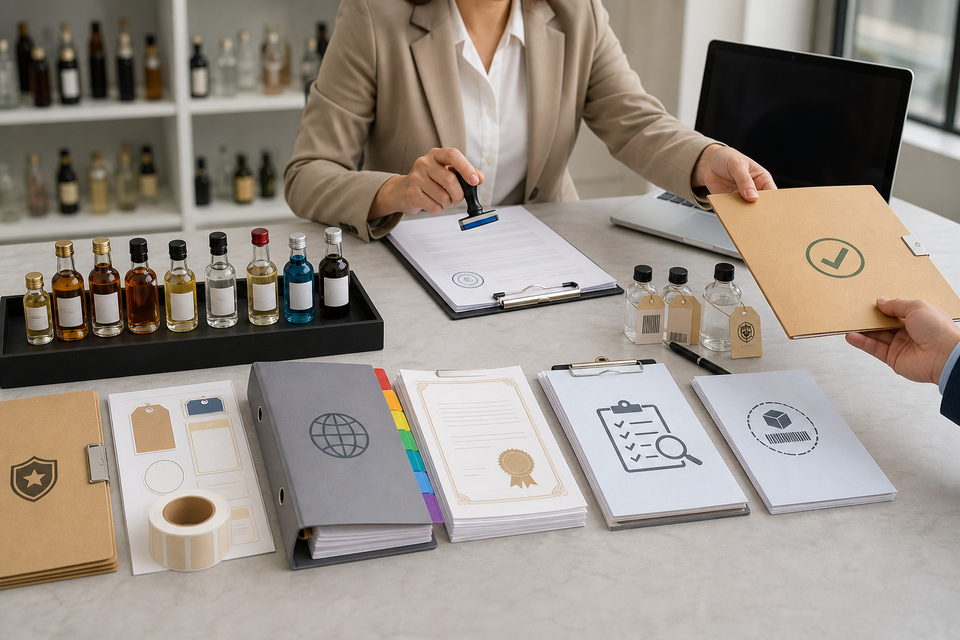
Before you finalize a supplier or place a bulk order, confirm that every part of your Mini Bottles program is legally permitted. Review the rules for purchasing, storing, transporting, reselling, gifting, and distributing in every state, province, or country involved.
With a compliance contact, this review usually takes one to three business days. Skipping it can cost far more. One shipment to the wrong destination can lead to carrier rejection, product seizure, or a fine that erases the margin on the entire program.
Why This Step Catches Buyers Off Guard
Alcohol regulations do not follow one national standard. A licensed distributor may be allowed to ship a SKU to a licensed retailer in Texas. The same shipment may be prohibited when a corporate gifting vendor sends it to a recipient in Utah or Massachusetts.
Buyer type matters as much as destination. Subscription box operators, event planners, hospitality groups, and corporate gift vendors each face different licensing rules. Many teams discover those requirements only after placing the order.
The rule: a transaction that is legal for the supplier is not automatically legal for the buyer, recipient, carrier, or final destination.
What You Need to Verify – By Program Type
Use the checkpoints below to identify the requirements that apply to your Mini Bottles program.
-
Resale license or retailer permit. If you resell mini bottles at retail, through a gift shop, or as part of a hospitality package, you need the correct state or provincial license. A licensed distributor does not shield your business from penalties if you lack the required permit.
-
Direct-to-consumer or cross-state shipping authorization. Fewer than half of U.S. states allow spirits to ship directly to consumers. FedEx, UPS, and regional carriers enforce destination-state rules at the label level. If your program ships alcohol-containing mini bottles to multiple states, map each destination against current shipping-permit law before you build fulfillment.
-
Event distribution permits. Serving or distributing alcohol at a corporate event, wedding, or activation usually requires a temporary event permit, licensed caterer, or licensed venue. That applies to 50ml bottles as well. Requirements vary by city and county.
-
Age-verification process. Any program that sends mini bottles to end recipients needs a documented age-verification step. This applies to subscription boxes, corporate gifts, and direct-mail campaigns. Keep the process in writing because carriers and regulators may request it.
-
Tamper seals and packaging compliance. Many states require tamper-evident seals on spirits packaging. Confirm that your supplier’s bottles meet the standard for every destination market. This is especially important if you repackage products or create custom gift sets.
-
Prop 65 notices for California. If your program ships to California, certain spirits and packaging materials may require a Prop 65 warning label. Ask your supplier whether the SKU already carries the notice or whether your team must add it.
-
Airline and hospitality constraints. FAA rules prohibit passengers from consuming personal alcohol on board. Some airline catering contracts also restrict which mini bottle brands can be stocked. Hotel operators with branded minibar programs may face franchise requirements that limit supplier options.
Documentation You Should Have Before Purchase
For internal review, create a simple compliance workflow diagram. Show buyer location, supplier license, shipping route, resale status, end recipient, and required documentation before purchase. This gives procurement, sales, fulfillment, and legal teams one shared approval path.
The Non-Alcohol Alternative – Often Overlooked
If your program involves corporate gifting, subscription boxes, or event distribution across multiple states, non-alcohol custom mini bottles remove much of the compliance burden. Sparkling water, premium juice, cocktail mixers, and non-alcoholic spirits are available in 50ml and 100ml formats from commercial suppliers.
These products ship as standard freight, require no alcohol carrier agreements, and remove recipient age-verification requirements. For a procurement team managing a 20-state corporate gift program, that tradeoff can cut setup time by weeks.
Common Mistakes to Avoid
- Assuming bulk online pricing includes commercial-use rights. Many online marketplaces sell mini bottles to consumers, not licensed businesses. A product listing does not confirm resale legality.
- Shipping alcohol in subscription boxes without carrier approval. Most subscription box fulfillment centers are not licensed to ship spirits. Confirm carrier rules, recipient age verification, and destination laws before adding alcohol to a recurring SKU.
- Treating state rules as static. Alcohol shipping laws change. States that allowed direct shipment last year may update restrictions this year. Build a quarterly compliance review into any multi-state program.
Pro tip: Build a Compliance Matrix for Multi-Region Programs
If your program spans more than three destination states or countries, create a matrix with four columns: destination, permit required, approved supplier or SKU, and review date. Pre-approving a short list of suppliers with relevant licenses reduces last-minute legal reviews during each order cycle.
Estimated time for this step: one to three business days for a single-state program. Allow five to ten days for multi-state or international programs that require legal review.
Step 5 – Build A Supplier Shortlist And Request Comparable Quotes

Step 5 – Build A Supplier Shortlist And Request Comparable Quotes
Build your shortlist before you request pricing. Suppliers who quote from an unstructured request may send numbers that appear comparable but are built on different assumptions. Case sizes, freight charges, substitution rules, and handling fees can all vary by supplier.
The goal of this step is simple: compare every Mini Bottles supplier on equal terms before you choose a partner.
Why Unstructured Quotes Lead To Poor Purchasing Decisions
Mini Bottles suppliers rarely quote the same way by default. One may quote per bottle. Another may quote per case of 120 units with freight included. A third may quote per case of 48 and exclude a handling surcharge. A fourth may use “starting at” pricing with no inventory guarantee.
Those differences make the cheapest quote difficult to trust. After you add freight, minimum order quantities, substitutions, and damage risk, the lowest unit price can become the highest landed cost.
Build A Standardized RFQ Template
Send every supplier the same request. A structured RFQ gives procurement, sales, and fulfillment one baseline for comparison. It also brings unclear costs and compliance gaps into the open before the purchase order is signed.
Your RFQ should include the commercial, operational, and compliance details each supplier needs to quote accurately:
- SKUs, sizes, and quantities – specify 50ml, 100ml, or 200ml, and require suppliers to flag any substitutions
- Delivery location and required date – confirm state coverage upfront, since alcohol shipping restrictions vary
- License status and compliance documentation – request resale license details, state distributor tier compliance, age verification process, tamper seal confirmation, and Prop 65 notices for California shipments
- Packaging and labeling requirements – include airline catering specs, event gifting formats, custom label rules, or hospitality minibar presentation standards
- Substitution rules – define what happens if a SKU is out of stock and whether approval is required before a swap
- Recurring order expectations – clarify whether the order supports monthly hotel minibar replenishment or a one-time event
- Payment terms – confirm deposits, net terms, accepted payment methods, and any fees before comparing quotes
Ask each supplier to return the same fields:
Keep the final column for your own calculation. Add unit cost, freight per unit, and any handling fees. Use total landed cost, not quoted unit price, to compare suppliers.
Screenshot suggestion: Include an RFQ template screenshot with columns for supplier, SKU, size, case pack, unit price, freight, minimum order, lead time, substitutions, compliance docs, and total landed cost.
The Compliance Fields Most Buyers Skip
Most RFQ templates stop at price and lead time. For alcohol Mini Bottles programs, that leaves operational risk unresolved.
State shipping restrictions vary widely. Several states require alcohol to move through a licensed in-state distributor instead of shipping direct from a national wholesaler. If your supplier cannot confirm legal coverage for your delivery state, the shipment may be seized or returned without a refund.
Event distribution rules add another layer. Distributing mini liquor bottles at a corporate event or wedding often requires a licensed caterer or permit holder. Confirm whether the supplier offers a compliant transfer process or whether that responsibility stays with your team. Build that answer into the quote process, not the post-PO cleanup.
Tamper seals and Prop 65 notices are non-negotiable for California buyers. Ask suppliers to confirm in writing that bottles arrive with intact tamper-evident seals and that the SKUs you order carry compliant Prop 65 notices on packaging.
For airline and hospitality buyers, confirm inflight and presentation requirements before you compare pricing. Ask about bottle dimensions, closure type, tray-safe labeling, and prior airline supply experience. A supplier built for retail gifting may not meet TSA, galley storage, or hospitality presentation requirements.
If alcohol compliance creates too much friction for your use case, consider non-alcohol custom bottles. Sparkling water, mocktail minis, or custom spirits-shaped packaging can deliver the same format and brand experience while removing the alcohol licensing layer.
Common Mistakes To Avoid
Accepting “subject to availability” without a contingency plan. Ask for the supplier’s fill rate on confirmed orders, substitution protocol, and lead time for guaranteed allocation. Vague availability language creates risk when timelines are fixed.
Skipping the sample invoice request. Before you place a first order, ask every shortlisted supplier for a sample invoice and damage claim process. A consumer-oriented seller may only have a returns page. A commercial supplier should provide freight damage procedures, photo requirements, timelines, and credit resolution steps. That difference shows whether the supplier is built for B2B purchasing.
Letting the lowest unit price drive the decision. A supplier quoting $1.10 per 50ml bottle with a 480-unit minimum, no inventory guarantee, and $180 in freight may cost more than a supplier quoting $1.28 with freight included, a 120-unit minimum, and confirmed stock.
Time And Effort Estimate
Expect 2-4 hours to build your RFQ template and send it to three to five suppliers. Add 1-2 business days for responses. If suppliers take longer than three days to return a structured quote, treat that as a signal about how they may handle reorders and issue resolution.
Pro tip: Ask for two quotes per supplier: one at your minimum quantity and one at 2-3x that volume. The price gap between those tiers shows how much leverage you may gain as your program scales.
Step 6 – Plan Quantity, Case Mix, And Reorder Frequency

Step 6 – Plan Quantity, Case Mix, And Reorder Frequency
Convert your demand forecast into a concrete order before you contact a supplier.
The math is simple, but many buyers skip it. When they do, slow-moving SKUs tie up storage and cash. High-velocity Mini Bottles run short during events, kit builds, minibar replenishment, and retail promotions.
Start With Demand, Not Minimums
Build your estimate from the program you need to support. Then translate that demand into cases and supplier minimums. Depending on your use case, start with one of these inputs:
- Events: Guest count x expected take rate, typically 1.0-1.5 minis per guest
- Minibars: Rooms x occupancy rate x average bottles per occupied room per night
- Tasting kits: Kit count x bottles per kit
- Retail/subscription: Average weekly velocity x replenishment lead time in weeks
- Training programs: Cohort size x servings or bottles per participant
Next, add a buffer for breakage, shrinkage, and demand swings. A 10-15% buffer is a practical range. Use 15% for new programs without historical data.
Calculator example:
500 event guests x 1.2 minis per guest = 600 bottles.
600 bottles x 1.10 buffer = 660 bottles needed.
If your supplier ships cases of 120, 660 bottles equals 5.5 cases. Order 6 cases, then assign the remaining 60 bottles before they arrive. Use them for staff training, media kits, backup stock, or the next scheduled activation.
Translate Bottles Into Cases and Order Minimums
Supplier case packs vary. A common format for 50ml bottles is 120 per case, but suppliers may use other pack sizes. Some allow mixed cases. Others require full cases by SKU below a set order threshold. Confirm these details before you build your SKU list.
Run three checks before you finalize the order:
- Minimum order quantity (MOQ): Does your volume qualify for wholesale pricing, or will you buy at retail and absorb the margin loss?
- Mixed case availability: Can you combine SKUs in one case, or does each SKU require a full-case minimum?
- Lead time vs. event date: Add supplier lead time and inbound freight time to your reorder planning. Plan beyond the event date.
This step protects margin and execution. Underbuying creates stockouts, guest dissatisfaction, missed event revenue, and incomplete tasting kits. Overbuying creates storage pressure, tied-up cash, flavor degradation risk, and operational clutter.
Control Your SKU Count Before It Controls You
More SKUs create more tracking work, more reorder complexity, and more chances to miss demand. One product may run short while another sits untouched.
For tasting and hospitality programs, use a controlled SKU architecture:
- Core SKUs (2-3 products): High-velocity items your team keeps in stock
- Premium upsell SKUs (1-2 products): Higher-price items ordered in smaller quantities
- Rotating seasonal SKUs (1 product at a time): Campaign, event, or seasonal-menu items
This structure helps your team forecast by pattern instead of guesswork. It also gives sales and hospitality teams variety without turning fulfillment into a SKU-management problem.
Set Reorder Triggers, Not Reorder Dates
Calendar-based reordering breaks down when events, hotel occupancy, promotions, and retail traffic fluctuate. Use a stock threshold instead. Reorder when inventory reaches the amount needed to cover one full lead-time cycle, plus your buffer.
Example: If your lead time is 10 days and you use 30 bottles per day, your reorder trigger is 330 bottles on hand. That covers 300 bottles for the lead-time cycle, plus a 10% buffer.
Build this trigger into your inventory system. If you do not have one, use a shared spreadsheet your fulfillment team checks weekly.
The Compliance Layer Most Buyers Miss
Quantity planning looks simple until a legal constraint changes the order. Before you commit to volume, confirm whether any of these rules apply to your Mini Bottles program:
- State alcohol shipping restrictions: Some states prohibit direct-to-consumer or business-to-business alcohol shipments from out-of-state suppliers. Confirm your supplier holds the right licenses for your destination state before placing a bulk order.
- Resale licensing: If you resell minis through retail, kits, or e-commerce, you need the applicable resale or liquor license. Purchasing without it creates liability that grows with order size.
- Event distribution rules: Distributing alcohol at an event is different from selling it. Depending on your state and venue, you may need a special event permit. You may also need a licensed caterer or retailer as the distributor of record.
- Age verification: For programs with direct consumer access, document your age-verification process before you scale the order. This applies to gift boxes, subscription kits, and minibar self-service.
- Tamper seals and Prop 65: California’s Proposition 65 requires warning labels on products containing listed chemicals if sold or distributed in-state. Spirits often qualify. If your program touches California, confirm labeling compliance with your supplier. Tamper-evident seals are standard on commercial spirits, but verify them for custom-filled or private-label mini bottles.
- Airline and hospitality constraints: Airlines and regulated hospitality venues often prohibit outside alcohol on premises. If you supply minis for in-flight or hotel-distributed programs, confirm the operator’s compliance framework before you commit to volume.
Resolve these issues before you finalize quantities. A 6-case order that cannot legally ship creates a cash-flow problem. An order that cannot be distributed without a permit also creates legal exposure.
For programs where alcohol compliance creates too much friction, consider non-alcohol custom mini bottles. Corporate gifting to multi-state recipients is one example. Sparkling water, olive oil, hot sauce, and branded spirits alternatives preserve the gifting and sampling format. They also avoid many alcohol licensing requirements.
Common Mistakes to Avoid
- Planning to exact headcount. Events, occupancy, promotions, and retail traffic fluctuate. Build the buffer before you submit the order.
- Expanding the SKU count beyond what your team can track. If you cannot reorder a SKU accurately, keep it out of the mix for now.
- Ignoring case-pack math. Ordering 5.5 cases is not an option. Know the rounding logic before you budget.
- Treating compliance as a post-order task. Licensing, shipping restrictions, age verification, and event permits belong in the planning stage.
Pro tip: For recurring programs, ask your supplier whether they offer blanket orders or forward commitments. These arrangements let you lock in pricing and total volume while releasing shipments in smaller scheduled drops. That reduces storage pressure, preserves cash flow, and protects core SKUs from price changes.
Step 7 – Inspect, Store, And Rotate Mini Bottle Inventory
Step 7 – Inspect, Store, and Rotate Mini Bottle Inventory
Treat receiving day as your final quality gate, not a warehouse formality.
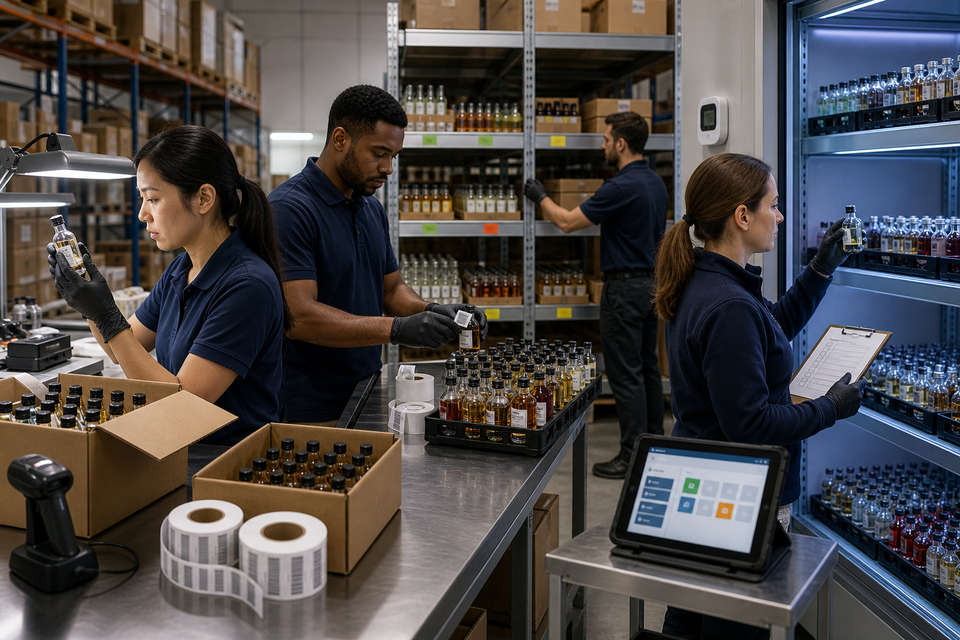
By the time Mini Bottles reach your storage room, they may have passed through a distributor, carrier, and third-party fulfillment center. Each handoff creates a risk of seal damage, temperature stress, leakage, label shifts, or packaging wear. Many issues stay hidden until someone opens the case. Catch defects before bottles reach guests, customers, or gift kits to protect inventory value and brand perception. Finding them later leads to waste, complaints, and avoidable service recovery.
What to Do on Receiving
Run every delivery against a standard receiving checklist. Record pass or fail at the case level, then inspect a bottle sample from each case lot. For premium kits or high-visibility programs, inspect every bottle before packing.
Check for:
- Case condition – no crush damage, moisture staining, or signs of leakage
- Bottle condition – no cracks, dents, scuffs, or packaging defects that affect presentation
- Seal integrity – caps seated flush, with no cracking, leakage, or sticky residue around the neck
- Fill level – evaporation or short fill that requires rejection or supplier review
- Label accuracy – SKU, brand, and ABV that match the purchase order exactly
- Liquid clarity – no haze or cloudiness in clear spirits
- Lot or receipt date – recorded at the case level for rotation tracking
- Storage location – assigned to a specific bin, shelf, or pick area before circulation
Screenshot suggestion: Use a receiving checklist with pass/fail fields for case condition, bottle condition, seal integrity, fill level, label accuracy, storage location, and inventory date. This gives procurement, fulfillment, and account teams a repeatable record if a supplier issue appears later.
How to Store
Store Mini Bottles upright. Spirits stored on their side can keep liquid in contact with the cap lining. Over time, that contact may degrade plastic-lined closures faster than the bottle body.
Keep storage cool, dark, and stable. For spirits, 55-65°F is a practical target. Temperature swings create the larger risk. A warehouse that reaches 90°F in summer and 40°F in winter exposes bottles to expansion and contraction cycles that stress small-format seals. Miniature bottles can be more vulnerable than 750ml bottles because the liquid-to-headspace ratio is different.
Separate plastic and glass inventory when the program requires close-range presentation. Tastings, amenity kits, and premium gifting all depend on packaging condition. Plastic 50ml bottles can off-gas slightly over time. Keeping formats separated also helps teams track presentation quality, pull the right SKU, and avoid mixing inventory with different standards.
How to Rotate
Use first-in, first-out rotation for any program that runs beyond one order cycle. Label each case with the receipt date when it arrives. Then pull from the oldest lot first when fulfilling orders.
Set an internal review date 90 days after receipt, even when the product has no formal expiration date. Spirits generally have long shelf lives, but quality can decline when seals fail quietly, bottles sit in heat or sunlight, or packaging interacts poorly over time. A 50ml bottle with a small closure gap can lose noticeable volume faster than a 750ml bottle with the same defect.
Common Mistakes
- Assuming “unopened” means risk-free forever. Seal failure can be gradual and hard to spot.
- Skipping inspection on reorders from trusted suppliers. Packaging quality can vary by batch.
- Mixing new and old inventory in the same pick location. Without date separation, FIFO discipline breaks within a few order cycles.
- Treating damaged labels as minor defects. In gifting, tasting kits, and event distribution, presentation shapes the customer’s view of the brand.
- Waiting until fulfillment day to count inventory. Short shipments and damaged lots are harder to correct under event or delivery deadlines.
Pro Tips
For premium gifting or tasting kit programs, inspect every bottle before packing, not just a sample pull. A cracked cap, cloudy liquid, sticky neck, or smudged label in a curated box signals poor handling, regardless of liquid quality.
For event distribution, stage a count and visual inspection 48 hours before the activation. That gives your team time to address short shipments, damaged cases, or SKU mismatches before guests arrive.
Time required: Allow 15-20 minutes per case lot for a thorough receiving inspection. For bulk orders over 50 cases, assign one receiver to own the checklist instead of folding inspection into general warehouse intake. Clear ownership reduces missed steps and gives your team a cleaner record if supplier follow-up is needed.
Step 8 – Use Mini Bottles Strategically For Sampling, Training, And Upsells
Step 8 – Use Mini Bottles Strategically for Sampling, Training, and Upsells
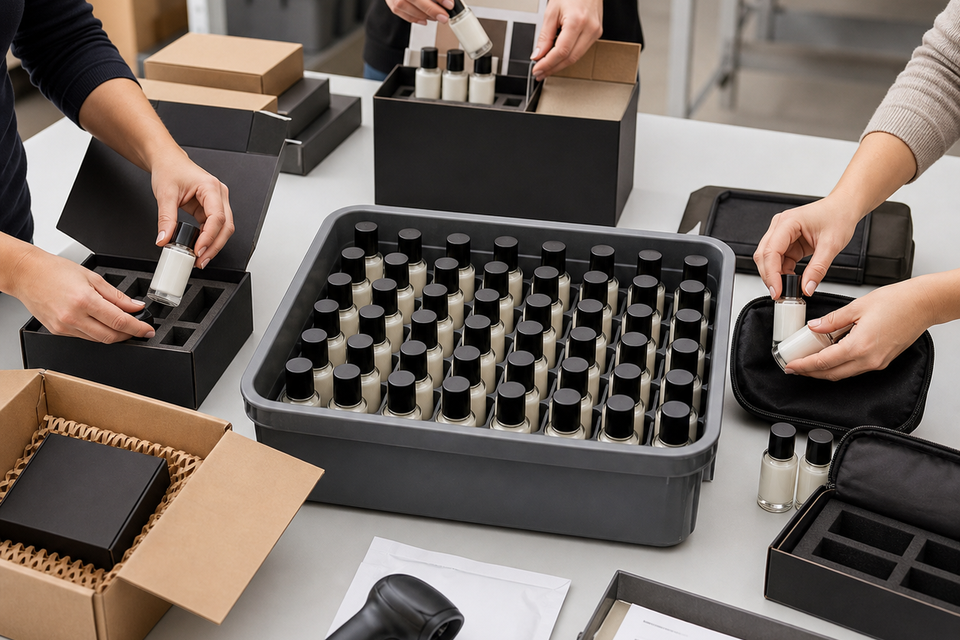
Mini Bottles become a measurable business tool when you stop treating them as giveaways. Build structured workflows for each use case, from tasting panels to VIP kits. That way, every bottle supports a purchase decision, training goal, or upsell path.
What This Step Covers
Mini Bottles can reduce full-bottle purchasing risk, help buyers test premium SKUs, support staff training, and validate new supplier lines. They also create a clear path to full-size purchases. They work especially well for expensive spirits, seasonal products, and new brands that need proof before a full-case commitment. The goal is simple: every mini bottle should move through a defined workflow with tracking attached. It should never disappear into a tasting room without a record.
Build “Try Before You Buy” Workflows
Minis earn their cost premium when they influence a larger purchasing decision. A 50ml sample that converts one buyer to a case of 750ml bottles can justify the spend. To improve the odds, define the audience, tasting format, follow-up step, and full-size purchase path before you distribute inventory.
Structure your program around one of these three use cases:
- Internal tasting panels – Use minis to evaluate new SKUs before committing to full-case orders. Keep the format consistent, including size, serving temperature, and blind or branded presentation. Record responses in the same scorecard each time.
- Staff training and menu validation – Bartenders and floor staff sell with more confidence after tasting the product. Minis let you train the full team without opening working stock or disrupting bar inventory.
- VIP sampling and retail discovery sets – Corporate gifting kits, bar welcome programs, and retail discovery bundles turn minis into buyer journey assets. Each format gives the recipient a clear next step toward a full-size purchase.
Track Conversion – Not Just Cost
The most common mistake is treating sampling as a cost center with no feedback loop. If you distribute 200 minis at a trade event but never track follow-up orders, you cannot defend or improve the program. Measurement turns sampling into a sales tool.
Track these data points at minimum:
- Mini bottle SKU distributed
- Tasting audience: staff, trade buyer, retail consumer, or VIP
- Rating or qualitative feedback
- Conversion to full-size purchase within 30 and 90 days
- Repeat purchase or reorder decision
- Influenced margin from full-bottle sales
A spreadsheet works at low volume. As the program grows, use a CRM tag or short post-tasting form to capture the same data with less manual work. Consistency matters more than tool choice. If every sample has an audience, score, and follow-up status, you can see which minis drive revenue and which ones only create activity.
Sample Tasting Scorecard
Even a small dataset shows which SKUs convert and which ones drain budget without a return. Review the scorecard monthly, not quarterly, while tasting feedback and follow-up conversations are still fresh.
Activate Each Mini With a Buyer Journey Asset
A bare mini bottle leaves the tasting decision with the recipient and provides no context. Pair each mini with a clear next step. The sample should connect directly to education, ordering, or rep follow-up.
Use at least one of the following:
- QR code linking to a full product page, reorder form, or brand story
- Tasting notes card with flavor profile, serve suggestions, and cocktail recipe
- Staff talking points sheet for in-venue education
- Reorder link or rep contact embedded in the packaging or card
This turns a passive sample into a measurable touchpoint. Buyers who receive product context, serving guidance, and a simple reorder path face fewer barriers between tasting and purchase.
Compliance Risks That Derail Sampling Programs
Most operational guides skip the legal and fulfillment risks that make mini bottle programs harder than they appear. Before you source, pack, ship, or hand out minis, confirm the rules for each state, channel, and venue. Procurement, sales, and fulfillment all need the same compliance assumptions before launch.
Resale and distribution licensing – If you distribute minis at an event, through a gift kit, or via a subscription box, confirm whether your state requires a separate event permit, sampling license, or retailer-to-consumer authorization. Requirements vary by state.
Age verification at distribution – Whether you sample at trade events, corporate activations, or through direct-to-consumer kits, you carry legal exposure if minis reach underage recipients. Build a documented age-check step into every distribution workflow.
State alcohol shipping restrictions – Shipping minis as part of a tasting kit or subscription box is illegal in some states without specific DTC licenses. Confirm coverage state by state before launching a nationwide program. Cross-reference Steps 4 and 2 before finalizing your distribution footprint.
Tamper seals and Prop 65 – California’s Proposition 65 requires warning labels for products containing certain chemicals. If your minis ship to California without the required notice, you face regulatory exposure. Tamper seals are a separate requirement in some hospitality and airline contexts. Confirm packaging requirements with your supplier before assuming standard minis qualify.
Event distribution rules – Many venues and event permit holders cannot allow third-party alcohol distribution without a co-licensed arrangement. Confirm event rules with the venue and local authority before scheduling a sampling activation.
Non-alcohol alternatives – If your program spans states with tight sampling restrictions, or if your audience includes mixed-age groups, consider non-alcohol custom mini bottles. Flavored water, mocktail mixers, or branded spirits alternatives can provide a compliant parallel while still delivering a branded tactile experience.
Effort and Timing
Teams often defer the compliance review and regret it later. Build it into setup before purchasing inventory or booking activations. That prevents the program from stalling after launch.
Pro tip: Run a 60-day pilot before scaling. Distribute a controlled quantity of minis across two or three audience segments. Then track conversion and calculate your cost per influenced sale. If the number works, scale the program. If it falls short, adjust the workflow before expanding. A measured pilot with 100 minis teaches you more than a poorly tracked launch with 1,000.
Step 9 – Real-World Mini Bottle Challenges And Solutions

Step 9 – Real-World Mini Bottle Challenges and Solutions
Most Mini Bottles programs hit the same wall. The pilot looks clean, then the first full-scale order exposes several problems at once. Availability tightens. Cases arrive damaged. Labels miss a state requirement. The team may also learn too late that 50ml, 100ml, and 200ml bottles create different serving economics.
Buyers who handle these issues well plan for failure points before volume, deadlines, and compliance pressure raise the cost of every fix. The goal is not to predict every problem. It is to identify the risks most likely to disrupt sourcing, shipping, resale, fulfillment, or the customer experience.
Use this step to build a practical response plan before the next order becomes a crisis.
Why Prevention Costs Less Than Reactive Problem-Solving
B2B buyers often underestimate how many moving parts sit behind a mini bottle program. A 50ml bottle is a small product with a long compliance tail. Resale licensing, state alcohol shipping restrictions, tamper seal rules, age verification, Prop 65 labeling, and airline or hospitality requirements can all affect execution.
One missed step can stall the entire program. For example, shipping alcohol minis to a state that restricts direct-to-consumer delivery can trigger carrier holds, returned shipments, and license review. The fix may be straightforward, but catching the issue after shipment adds cost, delay, and customer-facing risk.
Build a Risk Register Before You Scale
Create the risk register before your second order, not after the first failure. It does not need to be complex. A spreadsheet with five columns is enough: problem, likely cause, immediate fix, prevention step, and owner.
Use the register to cover sourcing, pricing, compliance, storage, quality, delivery, customer experience, and reorder planning. Assign one owner to each risk. Then define the prevention step and fallback action before the product leaves the supplier.
The Compliance Risks Most Buyers Skip
Resale licensing. Purchasing minis wholesale for resale usually requires a retail or resale alcohol license. Buying through a wholesale channel without the right license can void supplier agreements and expose the business to regulatory action.
State alcohol shipping restrictions. More than a dozen states restrict or prohibit direct alcohol shipments. If a supplier ships direct-to-consumer for a gifting program, verify state coverage before launch. Do not wait for a rejected delivery.
Event distribution rules. Distributing sealed minis at a corporate event is not automatically permitted. Many venues require a licensed caterer or bartender to manage distribution. Some jurisdictions treat sealed alcohol gifting like an open bar for permitting purposes.
Tamper seals and packaging integrity. Some states require visible tamper-evident seals on resold spirits. If bottles arrive without them, you may be unable to resell the product legally, even when the liquid and bottle condition are acceptable.
Prop 65 in California. Products containing regulated substances, including some spirits with trace compounds, may require a Proposition 65 warning on California-bound orders. Confirm the label requirement with your supplier before shipping west.
Airline and hospitality constraints. Airlines purchasing 50ml bottles for in-flight service face FAA rules on passenger-opened containers. Hospitality properties may also have brand exclusivity agreements or procurement mandates that restrict which SKUs they can stock. Build these constraints into your supplier brief at Step 5, not at receiving.
Non-Alcohol Alternatives Are Underused
Custom Mini Bottles filled with non-alcohol liquids can remove much of the compliance burden. Sparkling water, cold brew, flavored syrups, and specialty sauces avoid most alcohol-specific restrictions. They still support branded gifting, trade show activations, and corporate kits.
If the program goal is brand impression rather than a specific spirit, evaluate a custom-filled non-alcohol mini before committing to alcohol. These options often ship faster, cost less to fulfill, and avoid state alcohol distribution restrictions.
Common Mistakes That Derail Mini Bottle Programs
- Relying on one supplier for a mission-critical event. If your sole source runs out of stock, short-ships, or delivers damaged product, you have no fallback. Qualify a backup supplier before your first large order.
- Approving only one SKU or delivery window. A single approved format creates risk when inventory tightens or transit slips. Approve an alternate SKU, format, or delivery plan before the deadline becomes fixed.
- Ignoring small pilot problems. A mislabeled case on a 12-bottle pilot can become a mislabeled pallet on a 500-unit rollout. Log every issue and trace it to the root cause.
- Treating all mini formats as interchangeable. A 50ml bottle, 100ml bottle, and 200ml bottle create different pour counts, per-serving costs, and guest perceptions.
- Skipping storage verification. Bulk Mini Bottles often need more shelf planning than buyers expect. A case of 120 x 50ml bottles has a footprint similar to a standard wine case, but it may need different shelving and temperature handling.
- Overlooking mixed-case limits. Some suppliers cannot support custom case mixes, even when the SKUs are available individually. Confirm case-pack rules before building kits, event tables, or regional assortments.
Pro Tips From Programs That Have Run This Before
Run a structured pilot, not just a small order. Test supplier responsiveness on a reorder, not only the first shipment. Check delivery condition, case labeling, receiving workflow, storage fit, staff handling time, and customer reaction. A pilot that tests only product quality misses the operational risks.
Quantify cost per serving across formats before you commit. A 50ml bottle at $4.50 delivers one standard pour at $4.50 per serving. A 200ml bottle at $9.00 delivers roughly four pours at $2.25 per serving. Format selection is a unit economics decision, not just a packaging choice.
Build compliance review into the purchase order template. Every PO for an alcohol mini program should confirm destination state compliance, tamper seal requirements, label specs, and resale license number. This takes less time than resolving a carrier hold, supplier dispute, or event-day distribution issue.
Estimated time to complete this step: Two to four hours to build the initial risk register. One hour per quarter to review and update it as your program scales or your distribution footprint changes.
Advanced Tips For Scaling A Mini Bottle Program

Once your Mini Bottles pilot proves the model works, the next risk is scaling without structure. Fragmented buying erodes the three controls that made the pilot viable: pricing leverage, compliance oversight, and a consistent customer experience. The problem usually starts when each location, event team, or department sources product on its own.
Standardize the program before volume grows. Not after.
Build the Infrastructure First
Create four documents before you scale:
-
Approved Supplier List – Include supplier name, contact, lead time, minimum order, freight terms, and compliance documentation. Maintain one master version and share it with every buyer in your organization.
-
Approved SKU List – Define the specific products, sizes, and formats your program permits. If 50ml bourbon is approved and 100ml bourbon is not, document that clearly. Unauthorized substitutions create portion-control gaps, cost variance, and labeling compliance issues.
-
Reorder Thresholds and Substitution Rules – Set the inventory level that triggers a reorder. Then define the approved backup plan if a primary SKU is unavailable. Without rules, buyers improvise. Those substitutions can weaken case economics and introduce non-compliant products.
-
Compliance Matrix – Map each SKU to its permitted uses: resale licensed states, event distribution rules, age verification requirements, tamper seal standards, Prop 65 obligations, and airline or hospitality constraints. Update it quarterly. One compliance miss in a scaled program can create exposure across every location at once.
Measure What the Pilot Taught You
Your pilot generated data many teams fail to formalize. Turn that data into a working dashboard before the next buying cycle. The goal is to spot cost, inventory, and compliance issues before they spread across locations.
A Mini Bottles program dashboard should track, at minimum:
Review program economics quarterly, not annually. Supplier pricing, shipping costs, and state compliance requirements shift. A program that was profitable at launch can lose 8-12 margin points within a year if no one checks the data.
Use Pilot Volume to Negotiate Supplier Terms
Suppliers respond to reliable reorder data. If your pilot shows consistent volume, even 500 to 1,000 units per month, you have leverage many buyers overlook.
Bring your sell-through data to the next supplier conversation. Ask for:
- Tiered pricing at committed volume thresholds
- Reserved stock allocation for key SKUs during peak seasons
- Early access to new SKUs before general distribution
- Marketing co-op support for sampling programs or event activations
Most suppliers will negotiate on at least one point when you show predictable demand. Few buyers ask early enough to capture that value.
Compliance Risks That Get Worse at Scale
Compliance requirements that felt manageable during the pilot can become operational liabilities as volume grows. Address them before you scale, not during a recall or enforcement action.
Resale licensing: Confirm that every location receiving product holds the correct resale license for that state. A central license does not automatically cover satellite locations or pop-up events.
State alcohol shipping restrictions: Seventeen states currently prohibit direct-to-consumer alcohol shipments. Several others require special permits for B2B delivery. Your approved supplier list should flag which suppliers hold compliant carrier agreements for each destination state.
Event distribution rules: Sampling at a trade show in California follows different rules than distributing mini bottles at a private corporate dinner in Texas. Event-specific permits often require 30-60 days of lead time.
Age verification: If mini bottles move through e-commerce, gift fulfillment, or direct mail, adult signature requirements apply. Build those steps into your fulfillment SOPs before the first shipment goes out.
Tamper seals: Many state and hospitality regulations require intact tamper-evident seals at the point of sale or distribution. Add a seal inspection step to receiving checklists.
Prop 65 notices: If your program operates in California or ships product there, certain spirits packaging requires Proposition 65 warnings. Confirm which SKUs carry the required labeling with your supplier.
Airline and hospitality constraints: FAA regulations govern which sealed miniature bottles passengers may consume onboard. Hotel minibar programs often require brand-specific agreements with property management. Verify requirements by channel before distributing product.
Non-alcohol alternatives: If your program includes corporate gifting, wellness events, or dry venues, create a parallel approved SKU list for non-alcohol custom bottles. Sparkling water, botanical spirits, and premium sodas in 50ml or 100ml formats can serve the same gifting and sampling role without the licensing overlay.
Common Mistakes That Derail Scaling
Decentralized sourcing. This is the most expensive mistake. When regional managers, event coordinators, and department heads source independently, you lose pricing consistency, compliance visibility, and the volume that earns supplier leverage.
No substitution policy. Suppliers run out of stock. Without pre-approved substitution rules, buyers default to what is available. That creates cost variance, unlicensed products, and an inconsistent guest experience.
Treating compliance as a one-time check. State regulations change. Distribution agreements expire. Tamper seal requirements update. A compliance matrix protects the business only when someone owns the task of keeping it current.
Ignoring breakage rate. A 3-5% breakage rate is common in mini bottle programs and often goes unmeasured. At scale, a 4% breakage rate on 10,000 units per quarter represents 400 lost units before a single customer complains.
Pro tip: Build a Quarterly Program Review Into the Calendar Now
Schedule the review before the program scales. A 60-minute quarterly meeting should cover supplier performance, SKU velocity, compliance status, and unit economics. It takes less time than resolving a procurement dispute or compliance filing. These reviews also create the performance data you need to negotiate better supplier terms at renewal.
Conclusion
Build the best Mini Bottles program before the first purchase order goes out. Start by defining the use case, selecting the right format, and confirming legal and resale requirements. Then compare supplier quotes by total landed cost, not unit price alone. Set controls for inventory, quality checks, substitutions, and reorders so the program can scale beyond the first shipment. Before requesting quotes, create a one-page procurement brief and supplier scorecard. Together, these tools give finance, operations, compliance, and customer-facing teams a shared framework for choosing a supplier that can support the program beyond the first order.