


GLT
How can a standard perfume bottle be customized?
09-29-2026
Picture a standard 50ml perfume bottle sitting on a table—featuring a thick base and sturdy walls, this bottle shape has been a trusted staple in the perfume market for a century. This raises a crucial question: what could this bottle become before it reaches the consumer’s hands?
In fact, there isn’t just one way to customize it; there are five distinct methods, each with its own unique aesthetic, cost structure, and potential technical risks.
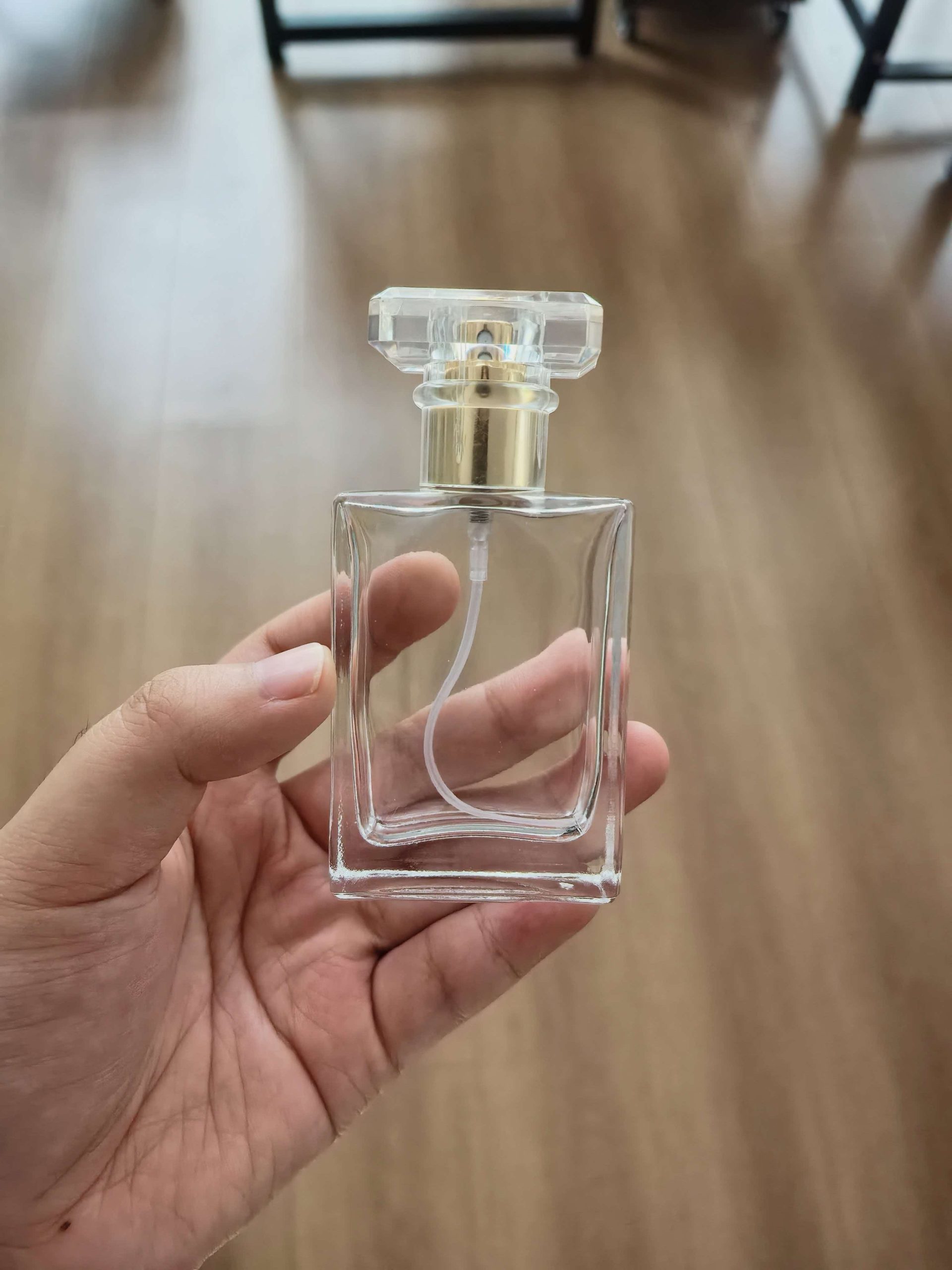
Option 1: Screen Printing
This is the most common and popular technique among clients. Screen printing typically employs a fine mesh screen to apply branding and corporate messaging onto the glass using UV-cured ink. Once cured, the design is durable and crisp, with sufficient opacity to achieve the desired visual impact on a clear bottle.
It is the most cost-effective method for printing brand information on glass, suitable for everything from small-batch runs to mass production in the hundreds of thousands. Indeed, many high-end perfume brands still rely on screen printing for their products.
Potential Risks: Consider the risk of registration misalignment during multi-color printing and issues with ink adhesion on curved bottle shoulders. Always request actual printed samples for your specific bottle shape rather than relying solely on flat mock-ups, as the real-world result can differ significantly from a 2D design.
Option 2: Hot Stamping (Gold/Silver)
Some perfume brands seek to stand out in ways that traditional screen-printing inks cannot achieve; this is where hot stamping (gold or silver) comes into play. The hot stamping process uses heat and pressure to transfer metallic foil onto the glass surface, curing it at temperatures between 150°C and 180°C to create gold or silver logos. This technique offers a luster unmatched by ink and creates a slight, raised relief effect—delivering a look that is both understated and luxurious. Potential Risk: Low-quality hot stamping foil can lose its luster within a short period (e.g., a single quarter). The quality grade of the foil is a critical factor for success, so buyers should confirm these details with the supplier before placing an order.
Option 3: Frosting
The frosting process transforms a smooth glass surface into a matte texture—reminiscent of sea glass—through chemical etching or sandblasting. It offers a unique advantage: effectively masking fingerprints that easily accumulate on glossy bottles during shelf display. This finish is permanent rather than temporary; because it originates from the glass itself rather than being a surface coating, it will never peel or fade.
Potential Issue: Maintaining uniform etching depth on complex curved surfaces can be challenging. Before placing an order, clients should pay close attention to areas like the bottle shoulder and base, rather than focusing solely on the flat sides of the bottle.
Option 4: Colored and Pearlescent Lacquers
Spray-coating the glass allows for a variety of effects: rich, saturated hues; translucent finishes that reveal the perfume’s natural color; and pearlescent effects that shift as the bottle turns. The lacquer is baked at high temperatures to ensure adhesion and durability, and the virtually limitless color options represent the core advantage of this method.
Potential Issue: Adhesion. If the lacquer at the bottle neck peels after months in a humid bathroom environment, the issue lies with the coating process rather than the glass itself—success depends on surface pretreatment and the choice of coating system. Therefore, you should seek a supplier that treats coating as a rigorous technical process rather than a simple spray job.
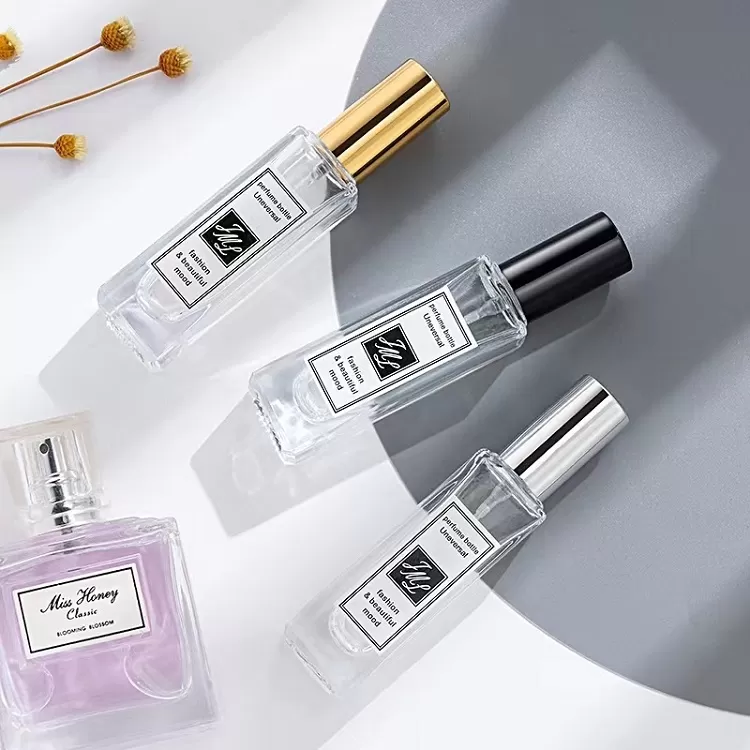
Option 5: Process Combinations
The aforementioned processes are not mutually exclusive. Products that exude a sense of “design” rather than a mere “printed” look often combine two techniques on a single bottle: for instance, a metallized body paired with metallic-finish screen-printed text; a frosted texture combined with a hot-stamped logo; a spray-coated band that leaves a transparent window; or selective metallization that allows the perfume’s natural color to shine through the uncoated areas. Suppliers capable of applying multiple techniques in succession to standard glass bottles can offer you results that rival custom-molded bottles—without the need for expensive mold development.
How do you make the right choice and avoid future regrets?
Three questions hold the key:
– What is the bottle’s intended positioning? For an understated, minimalist style, choose screen printing or frosting; for brand-color identity, opt for lacquer coating; for the gift-giving season, select hot stamping.
– Which technique can withstand the conditions of a consumer’s bathroom? Frosting and screen printing offer lasting durability; the durability of lacquer coating and hot stamping depends on the quality of the finish—be sure to inquire about the substrate and the curing process.
– Which technique suits your order volume? Screen printing and frosting are ideal for small-batch production, whereas combining techniques often entails higher minimum order quantities (typically in the thousands) and involves the longest production lead times among these five decorative processes.
All it takes is one sample and one email.
Simply send us a photo of the finish you envision, along with your order quantity and target market. We will recommend the best-suited existing bottle shape for that finish and provide a realistic production timeline. If desired, we can even send you a physical sample featuring your brand logo, allowing you to make decisions based on tangible reality rather than just concepts on paper. With the glass bottle already available, the final step is simply the application of exquisite craftsmanship.