


GLT
9 Best Square Glass Ink Bottles for Caligraphy and Fountain Pen Brands: Sourcing Guide for Retailers
05-15-2026
9 Best Square Glass Ink Bottles for Caligraphy and Fountain Pen Brands: Sourcing Guide for Retailers
Choosing a Square Glass Ink Bottle for a calligraphy or fountain pen line goes beyond shelf appearance. For retailers and brand buyers, bottle design affects storage stability, filling ease, sealing performance, breakage risk, and the customer experience. The wrong choice can lead to handling issues, leakage concerns, damaged stock, and complaints that weaken confidence in the product line.
Understanding Square Glass Ink Bottle
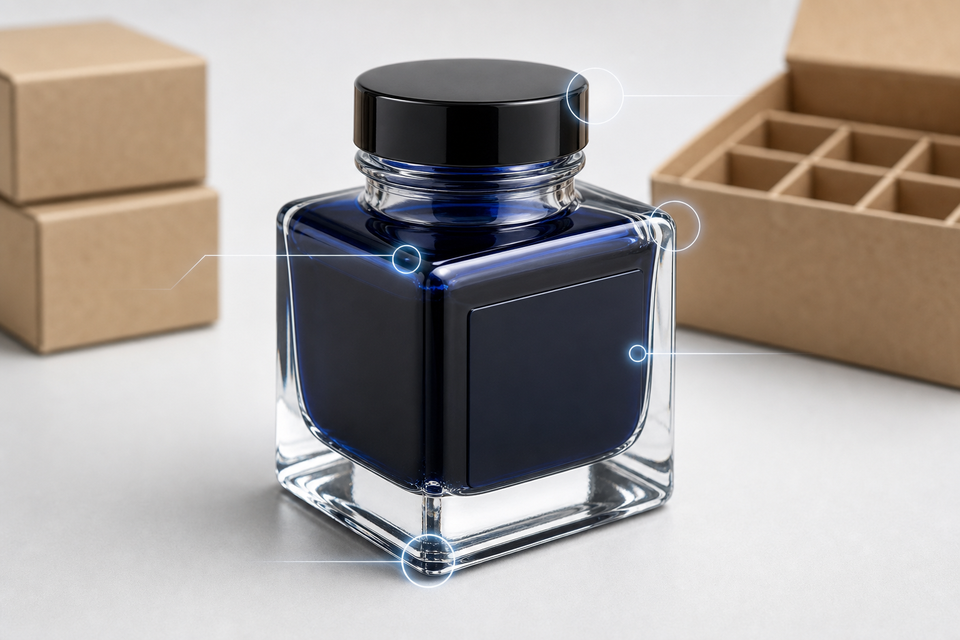
Understanding a Square Glass Ink Bottle
Choose a Square Glass Ink Bottle by fit for use first and appearance second. The most attractive bottle can become the riskiest wholesale option if it tips easily, blocks common filling tools, dries out ink, or breaks in transit.
Start with a clear evaluation path before you request a quote. That approach turns aesthetic preferences into practical procurement criteria and helps you screen out bottles that look good in photos but fail in use.
-
Define the use case
- What: Confirm whether the bottle is for fountain pen ink, calligraphy ink, pigment ink, decorative inkwell use, or sample-size ink.
- Why: Each application needs different specifications. Fountain pen users need easy filling. Pigment inks need tighter sealing and wider access for cleaning. Decorative bottles allow more emphasis on shape.
- How: Build a spec line that covers capacity, neck finish, mouth diameter, cap type, liner material, glass weight, and carton pack.
- Avoid: Antique-style listings that rely on photos and “circa” language but omit neck, cap, or capacity details.
-
Test the bottle like a user, not a collector
- What: Check base stability, grip comfort, mouth width, and filling access.
- Why: End users may praise an ornate square bottle, but B2B buyers carry the cost of returns. A narrow mouth complicates fountain pen filling. A slick square body increases slip risk. An uneven or raised base makes the bottle less stable on a desk.
- How: Run a simple 10-sample test: fill, cap, shake, open, pour, refill, and pack. Reject designs that wobble on a flat surface or do not fit your target pen, dropper, brush, or filling nozzle.
- Pro tip: Treat mouth diameter as a decision gate. If the customer needs to dip a converter, brush, or pipette, visual appeal will not solve poor access.
-
Separate antique, vintage, reproduction, and antique-style
- What: Classify the listing before you buy.
- Why: A vintage Skrip-lid bottle listed at $19.99 may work for display or resale, but it is not a scalable packaging source. A reproduction bottle can deliver an old-world look with more consistent modern closure performance.
- How: Ask for evidence, including mold marks, embossing, lid type, wear pattern, glass color consistency, and production origin.
- Avoid: Paying antique premiums for “antique-style” stock without proof of age.
Once the use case, handling, and listing type are clear, move to sample approval and landed-cost pricing. Ask suppliers for drawings, cap liner options, MOQ, breakage allowance, carton dimensions, and per-unit pricing at 1,000, 5,000, and 10,000 pieces. A practical Square Glass Ink Bottle review takes 2-4 hours for specs and 7-14 days for sample testing. That process helps prevent filling complaints, evaporation claims, and avoidable breakage.
Conclusion
The best Square Glass Ink Bottle is not simply the most eye-catching option. In B2B sourcing, the stronger choice balances shelf appeal with base stability, usable mouth size, cap fit, grip, sealing performance, breakage exposure, and reliable handling. Before placing an order, compare each design against the practical risks covered in this guide. A bottle that performs well across wholesale and retail environments protects brand presentation, reduces handling concerns, and supports a better customer experience. Use those criteria to choose packaging that looks good and works reliably after delivery.