


GLT
7 Best Wedding Inflatable Flower Suppliers for Event Planners and Rental Companies
05-16-2026
7 Best Wedding Inflatable Flower Suppliers for Event Planners and Rental Companies
Choosing a Wedding Inflatable Flower supplier requires more than comparing product photos. Event planners and rental companies need décor that installs safely, fits the design brief, satisfies venue requirements, and supports profitable reuse across multiple weddings. To make that decision with confidence, this guide explains how to evaluate suppliers and products before you buy. It covers buyer prerequisites, format selection, venue constraints, customization, ROI, outdoor safety, installation, maintenance, troubleshooting, and inventory scaling. Use it to compare options through a practical B2B lens, with performance and profitability guiding the purchase.
Prerequisites Before Buying or Installing Wedding Inflatable Flowers
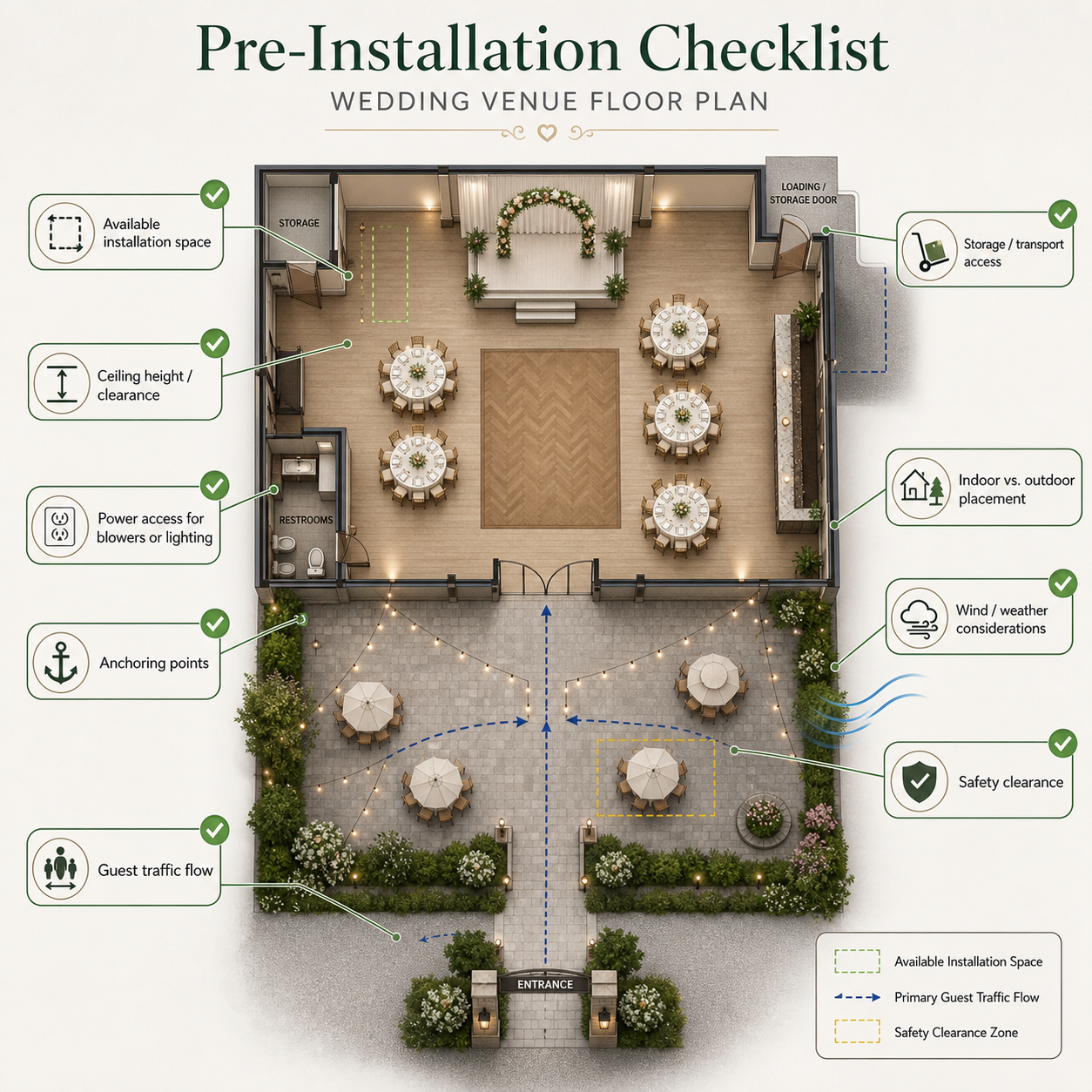
Prerequisites Before Buying or Installing Wedding Inflatable Flowers
Before you quote or buy a Wedding Inflatable Flower, confirm three requirements. The design must look intentional, the venue must support it, and the margins must hold after labor and storage. Inflatable flowers look cheap when treated as oversized props. They look premium when used as event architecture: scaled to the room, finished in matte fabric, wired cleanly, and paired with real or silk florals. Use the checks below before proposing them to a wedding client, venue, or rental inventory committee.
-
Define the styling rules before the sales pitch.
Set the flower size, color palette, finish, and placement by wedding zone before presenting the concept. Luxury clients judge inflatable décor by proportion and restraint, not novelty. Choose muted colors, avoid glossy toy-like finishes, and anchor one large inflatable bloom with fresh greenery or silk florals. A matte ivory flower behind a sweetheart table can look intentional and high-end. Five bright primary-color flowers beside a chapel altar will likely weaken the setting and distract from the ceremony. -
Check the venue before ordering.
Once the design direction is clear, confirm whether the venue can support it. Check ceiling height, hanging points, floor anchoring, wind exposure, power access, and approval rules. Each placement carries different risks. A ceiling flower, poolside bloom, and garden aisle piece all need separate support plans. Bring a tape measure, handheld anemometer, photos of proposed blower locations, and a simple install sketch. Favor sites where cables, blowers, and anchors can be hidden safely. Choose venues with clear power access, secure anchoring options, and enough space for guest flow. -
Prepare the install kit and labor plan.
After the venue check, plan the mechanics before promising a premium finish. Your kit should include a blower or integrated air system, extension cords, GFCI protection, sandbags, water weights, soft straps, ground stakes, cable covers, a repair kit, and storage bags. The décor feels upscale only when the support system disappears. Budget 30-60 minutes for small flowers and 1-3 hours for altar or ceiling installations. Add time for venue approval or rigging inspection, especially when the piece hangs overhead or sits in a high-traffic area. -
Price the full landed and operating cost.
Finally, build a per-event cost sheet before presenting the item to a client or inventory committee. Include purchase price, customization, shipping volume, duties, setup labor, power distribution, maintenance, repair materials, cleaning, storage, and insurance. Unit price alone cannot show whether the product deserves inventory space. A stronger decision comes from three outcomes: safe installation, elegant styling, and repeat rental margin across multiple weddings. If one outcome falls short, revise the design, placement, or pricing before you buy.
Step 1 – Choose the Right Wedding Inflatable Flower Format for the Event Goal
Step 1 – Choose the Right Wedding Inflatable Flower Format for the Event Goal
Choose the Wedding Inflatable Flower format by event function first, then test whether it can earn its keep. A 10-foot inflatable rose can work as an altar focal point. In a narrow aisle or low-ceiling ballroom, the same piece may feel awkward. The right format should support the wedding moment, fit the venue, and justify its rental price after labor, freight, storage, and repair costs. This keeps the decision tied to both design impact and profit.
Use this selection path before you source or quote:
-
Define the wedding moment.
Match the piece to one clear job: ceremony backdrop, aisle feature, cocktail-hour photo zone, reception ceiling drama, entrance marker, pool décor, lawn sculpture, after-party installation, or brandable rental inventory. -
Check the venue constraint.
For ceiling installations, confirm rigging points, load limits, and height clearance. For lawns and courtyards, check wind exposure, anchoring rules, power access, and venue approval. For pools, choose sealed floating flowers instead of blower-dependent pieces. -
Run the margin math before you buy.
A beautiful prop can lose money if it needs four crew members, oversized freight, and climate-controlled storage. Price the piece as inventory, not just décor.
For profitability, compare formats with a simple per-event gross margin calculator:
Gross margin per event = rental price − [(purchase + inbound shipping + repair reserve) ÷ expected reuse cycles] − labor − outbound transport − cleaning/storage.
Example: an inflatable flower arch costs $900, ships for $180, needs a $70 repair reserve, and can rent 20 times. Its inventory cost per event is $57.50. If you rent it for $450 and spend $120 on labor and transport, gross margin is $272.50 per event.
Use the same calculation when comparing inflatables with other wedding décor categories. Fresh florals reduce storage needs, but they are single-use and carry high design labor. Silk flowers offer reuse, while bulky storage and cleaning add cost. Balloons install fast, but they have a short life and a lower luxury perception. Foam props photograph well, though freight and damage can reduce margin.
Source beyond product photos. That shortcut often leads to décor that looks strong online but fails onsite. For premium weddings, specify fewer, larger pieces in muted ivory, blush, champagne, or soft green. Negative space usually looks more expensive than a room crowded with small inflatables.
Step 2 – Confirm Venue Conditions, Permissions, and Installation Constraints
Step 2 – Confirm Venue Conditions, Permissions, and Installation Constraints
Confirm venue conditions before you approve the design, price, or rental contract. A Wedding Inflatable Flower altar may look simple on a mood board. In practice, the venue can control power use, anchoring, blower location, cord routing, fire-lane clearance, noise, and teardown timing. For a historic Spanish courtyard wedding, treat the altar as a temporary installation rather than standard décor. Courtyards, estates, museums, and landmark properties often restrict stakes, adhesives, drilling, hanging, and heavy equipment.
Settle these details before install day. At sensitive venues, one rejected anchor point can change the design, quote, and delivery plan. Start with a venue suitability review and define three required outputs: approved location, approved fixing method, and approved install plan. Allow 30-60 minutes for a remote review using photos, floor plans, and venue rules. Schedule 60-90 minutes onsite when the property has historic surfaces, tight loading access, or guest-flow constraints.
Build the review around three areas:
- Installation zone: courtyard, poolside, lawn, ballroom ceiling, tent, entrance, stage, or photo area
- Site constraints: floor surface, ceiling height, rigging points, wind exposure, sprinkler clearance, fire exits, and loading route
- Operations: power source, extension-cord routing, blower placement, noise limits, install window, ceremony timing, and deflation plan
In the Spanish courtyard example, the planner wants a freestanding inflatable flower altar against a stucco wall. The venue rejects stakes because the stone paving and planted borders are protected. The supplier proposes water ballast hidden inside decorative planters and a low-profile freestanding base behind the florals. This keeps the structure stable without drilling, staking, or touching the wall. The same non-invasive approach can work for museums, estates, and courtyards that require reversible installations.
After anchoring is resolved, confirm blower placement separately. It affects sound, sightlines, and airflow. Place blowers behind the altar, behind planters, or around a corner where airflow still works. Keep them far enough from microphones to avoid motor noise. Route cords away from every guest walkway. If a cable must cross a path, reroute the design or use venue-approved cable covers with staff monitoring. Keep loose extension cords away from aisles, catering paths, and fire exits.
Add a simple venue approval worksheet to your proposal. Include checkboxes for courtyard, pool, lawn, ballroom ceiling, tent, and historic property. Add sign-off lines for anchoring, power, blower location, cord route, fire-lane clearance, guest flow, install time, and post-event deflation. This gives planners, venues, and suppliers the same reference point before production begins. It also turns approval from a verbal assumption into a documented installation plan.
The most expensive mistakes usually come from unconfirmed conditions. Teams may assume inflatables are allowed, use stakes on protected lawns, block fire lanes, place blowers near ceremony microphones, or discover there is no teardown window after the reception. Quote the Wedding Inflatable Flower only after the venue confirms the constraints. That protects your margin, reduces redesign, and gives the client a venue-ready plan instead of a beautiful risk.
Step 3 – Build an Elegant Design Concept That Avoids the “Tacky Inflatable” Problem
Step 3 – Build an Elegant Design Concept That Avoids the “Tacky Inflatable” Problem
Treat inflatable flowers as architectural floral sculpture, not party props. The question is not, “Are inflatables appropriate for weddings?” A better question is, “Which wedding settings let oversized, lightweight floral forms outperform fresh, silk, or foam décor?” That shift helps protect your brand with couples, families, venues, and luxury planners who may distrust unconventional décor. A Wedding Inflatable Flower concept works best when it solves a clear design problem: adding scale, creating a photo moment, or filling open space without heavy floral mechanics.
Planner skepticism is reasonable when inflatable décor relies on glossy PVC, rainbow lighting, exposed cords, and random flower shapes. The same product can look premium when you control color, finish, scale, lighting, and placement. Before you pitch the concept, qualify the event setting and installation risk. The goal is to match the flower format to the wedding zone, then remove anything that makes the installation feel temporary or poorly planned.
Build the concept in three steps:
-
Set the palette first. Choose ivory, blush, champagne, sage, mocha, or monochrome white. Limit the design to two main colors plus one accent. Bright mixed colors push the look toward children’s events.
-
Specify premium finishes. Ask suppliers for matte fabric, satin-textured PVC, or coated Oxford cloth samples before buying. Shiny plastic reflects flash photography and makes even a strong shape look temporary.
-
Control the scene. Use warm white lighting, hidden blowers, cable covers, and visual anchors such as plinths, hedging, silk greenery, or fresh flowers. Pair inflatables with real or silk florals at eye level, so the installation feels layered and intentional. Reserve inflatable flowers for scale, height, and visual impact.
Once the setting and design rules are clear, use a mood board to speed procurement and client approval. Show a side-by-side comparison: one “novelty look” with neon colors, mixed petals, and color-changing LEDs; one “luxury look” with ivory roses, champagne dahlias, sage foliage, warm uplighting, and concealed power. This gives buyers, planners, and venue teams a shared visual standard before pricing or production begins.
Budget for more than the flower. Ask suppliers to quote product cost, blower type, packing size, repair kit, shipping volume, setup labor, and reuse expectations. For rental programs, one large hero installation may outperform several small pieces. It creates a stronger photo asset, reduces setup complexity, and makes pricing easier to explain.
The common mistakes are easy to avoid: color-changing LEDs, too many flower shapes, glossy finishes, weak visual context, and visible cords or blowers. Before quoting, request renderings, material swatches, anchoring details, and venue installation notes. Your sales team can then present a defensible design concept, not a risky novelty pitch.
Step 4 – Specify Customization Requirements Before Requesting a Quote
Step 4 – Specify Customization Requirements Before Requesting a Quote
Prepare a customization brief before you ask for pricing. A supplier can quote a standard inflatable rose from a photo. For a luxury wedding installation, they need details on size, finish, lighting, anchoring, packing, and reuse. For a custom Wedding Inflatable Flower, these specs shape production cost, freight volume, accessories, and lead time. Spend 45-60 minutes building the brief before contacting manufacturers. That way, every supplier quotes against the same requirements, and you can compare pricing with fewer gaps.
This step matters because Wedding Inflatable Flowers are moving from “cheap floral substitute” to inflatable art for experiential weddings. The Knot’s 2023 Real Weddings Study reported an average U.S. wedding cost of about $35,000. In that market, planners and venues need décor that photographs well, installs efficiently, and supports repeat use across paid events. For B2B buyers, the goal is not to “buy a big flower.” The goal is to build a rentable visual moment clients have not already seen 50 times.
Use this template to give suppliers the details they need:
For example, a poolside destination wedding brief should go beyond “large white floating flowers.” Ask for three 1.8-meter matte ivory lotus inflatables, sealed for pool use, with warm-white internal LEDs. Specify 110V or 220V power by market, removable ballast, no visible logo, a packed-size estimate, and repair instructions. These details help the supplier quote the full installation, including accessories and packing, instead of pricing only the inflatable shell.
Small omissions often raise costs later. Buyers may request only a photo match, skip matte versus glossy finish, overlook voltage standards, or forget outdoor suitability. If you plan to rent the piece 10+ times per year, prioritize durable material, replaceable LED parts, and repair access over exact one-event color matching. A broader color match is easier to manage than a Wedding Inflatable Flower that fails after repeated installs.
Before payment, ask for 3D renderings, material samples, production photos, packed-size estimates, setup instructions, and repair instructions. These assets reduce sourcing risk before shipment and help your team confirm what will arrive. They also give your sales team stronger materials for client proposals. With the right brief and supplier assets, you can present the design as premium inflatable art, not another arch or balloon wall.
Step 5 – Calculate Cost, Rental Pricing, and ROI Before Adding Inflatable Flowers to Inventory
Step 5 – Calculate Cost, Rental Pricing, and ROI Before Adding Inflatable Flowers to Inventory
Before you add inventory, build a simple profit model. A Wedding Inflatable Flower should earn its place through rental revenue, add-on design fees, and repeat use. It should do more than look impressive in a showroom or product catalog. The right piece should support a clear event use case, fit your labor capacity, and reach payback within a realistic number of rentals.
Start by comparing total landed cost with expected rental income, operating costs, and reuse cycles. For each SKU, calculate:
- Total landed cost: unit price, customization, freight, duties, packaging, spare blower, and repair kit.
- Operating cost per event: delivery, setup crew, teardown, cleaning, drying, testing, storage handling, and power planning.
- Marketing cost: product photography, sales deck updates, sample styling, and listing creation.
- Revenue per event: rental fee, installation fee, lighting add-ons, and design package margin.
- Reuse target: expected uses per season before repairs, repainting, fabric wear, or style fatigue.
- Break-even point: total landed cost ÷ gross profit per rental.
Set a clear decision rule before you buy. If the piece cannot break even in 3-5 paid rentals, treat it as a custom client purchase instead of core rental inventory. This keeps speculative designs from tying up warehouse space, sales effort, and installation capacity.
This matters because inflatable wedding flowers sit within the broader shift toward inflatable art and experiential décor. Couples want ceremony moments, photo areas, floating pool installs, and reception ceilings that feel fresh. They are looking beyond the standard greenery arch or balloon wall. That demand creates pricing power when you sell the piece as design architecture, not as a standalone prop.
For example, a matte white inflatable calla lily altar with warm LED uplighting, silk floral accents, and sheer draping can support a higher package price. The same unit listed as “giant inflatable flower rental” will attract price shoppers. Positioning affects margin, so your buying sheet should compare inflatable flowers with other décor categories before you commit.
Price inflatable flowers as bundles, not line items. Instead of renting one oversized peony for $400, package a ceremony focal set. Include two 8-foot inflatable peonies, oversized matte vases, warm LED color, silk floral bases, delivery, setup, and teardown. If your operating cost is $350 and you charge $1,250, you have $900 in gross profit before overhead. A $2,700 landed investment breaks even in three rentals.
Customization gives planners more ways to justify the premium. Offer flower species, oversized vases, LED color presets, altar arches, floating pool-safe installations, logo-free luxury finishes, and hybrid designs with fresh florals. These options help planners sell the concept to couples who want a social-media-ready wedding look that still feels polished and venue-appropriate.
Watch for costs that weaken ROI:
- Freight volume, especially for oversized vases and rigid packing crates.
- Labor for blower placement, anchoring, drying, and teardown.
- Storage space, since bulky décor can reduce warehouse margin.
- Shorter reuse cycles from fabric stains, seam stress, and trend fatigue.
- Base rental pricing that absorbs delivery, install, teardown, power planning, or venue-specific anchoring.
Pro tip: assign each inflatable flower to a wedding zone before buying it. A floating pool lotus, ceiling-hung daisy, altar rose arch, and entrance vase set serve different buyers and price points. This makes your inventory strategy clearer and your sales deck stronger.
Step 6 – Plan Outdoor Durability, Weather Risk, and Guest Safety
Step 6 – Plan Outdoor Durability, Weather Risk, and Guest Safety
Treat each outdoor Wedding Inflatable Flower as a temporary art installation with a safety plan, not simple décor. Before quoting a garden altar, pool flower, or oversized vase entrance piece, build a written checklist. Cover rain, wind, heat, UV exposure, power reliability, ground surface, and guest interaction. This planning protects the client experience, the venue relationship, and your margin.
Start with weather risk because it drives the biggest on-site decisions. The U.S. National Weather Service issues wind advisories at sustained winds of 31-39 mph or gusts of 46-57 mph. Most wedding inflatables need much lower operating limits. Follow supplier guidance, then adjust for size, shape, exposure, and anchoring method. A 12-foot flower arch on a lawn carries different risk than a floating pool bloom or ceiling-suspended floral cloud.
Use this process:
-
Set weather thresholds.
Ask the manufacturer for written wind guidance. If none exists, treat that gap as a procurement risk. For exposed outdoor weddings, many teams use conservative internal triggers. Monitor at 10 mph, add ballast or adjust placement at 15 mph, and deflate or relocate at 20 mph unless the unit is certified for higher wind. -
Plan the site conditions.
Check grass, stone, decking, sand, pool edges, and heated pavement before installation. Sharp gravel, hot concrete, and exposed metal hardware can damage seams. For pool installations, confirm tethering points, electrical separation, retrieval access, and venue approval. -
Assign a weather decision-maker.
Give one experienced person authority to pause inflation, move guests, switch to a sheltered location, or cancel the installation. Avoid leaving this decision to a junior installer during a weather shift.
Build your checklist like this:
Common mistakes can cost more than the equipment. Avoid generic “waterproof” claims, rough or hot surfaces, hidden blowers that overheat, and unattended tall flowers during wind shifts. These failures are preventable when you define thresholds, anchoring, backup locations, and guest controls before the event.
Price the safety kit into the rental package instead of treating it as an add-on. Include an anemometer, extra ballast, ground mats, outdoor-rated extension cords, cord covers, seam repair supplies, and labor for monitoring. A basic handheld anemometer often costs far less than one damaged installation or refund claim.
Product strategy matters here, too. Inflatable wedding flowers are moving into experiential wedding décor: custom peonies, orchids, roses, oversized vases, LED color changes, altar arches, floating pool flowers, logo-free matte finishes, and hybrid builds with fresh florals at the base. Some buyers may see them as cheaper flower substitutes. Position them instead as inflatable art for social-media-ready wedding environments. This approach fits clients tired of standard arches, neon signs, and balloon walls.
Next action: ask suppliers for material specs, seam construction, blower requirements, wind guidance, anchoring instructions, and repair terms before you buy. Then add a weather clause to every rental agreement. Define who can deflate, relocate, or cancel the piece when safety conditions change.
Step 7 – Install, Inflate, Anchor, and Style the Wedding Inflatable Flower Onsite
Install the Wedding Inflatable Flower like temporary art, not a party balloon. Follow a controlled event-day sequence: inspect, unpack, position, partially inflate, anchor, fully inflate, conceal equipment, style, and photograph-test before guests arrive. This order protects the product, keeps the venue safe, and gives the planner a finished scene that looks intentional on camera.
That discipline matters because inflatable wedding flowers now compete with experiential décor. They appear as oversized floral sculptures, pool installations, altar art, and photo-driven reception features. Pinterest shows inflatable flowers as hanging ceiling pieces, oversized vase displays, and garden statements. Alibaba lists 999+ inflatable flower products. In a crowded market, onsite execution separates a premium rental asset from a cheap-looking prop.
Use this install sequence on event day:
-
Inspect the site first.
Check floor slope, wind exposure, ceiling points, guest paths, power access, water features, and photo sightlines. For ceiling flowers, confirm the venue’s rigging point rating before attaching anything. For poolside or floating flowers, confirm depth, wind conditions, edge access, and the retrieval plan. -
Unpack on a clean tarp.
Keep the flower off gravel, wet grass, unfinished stone, and dusty ballroom floors. Before inflation, inspect seams, valves, zippers, LED wiring, and printed or matte-finish surfaces. A seam issue found while flat takes minutes to patch. The same issue found after styling can delay room handover. -
Position before full inflation.
Move the flat or half-inflated piece into place first. This keeps the team from dragging a 10-foot rose, orchid, peony, or tulip across flooring and finished décor. For oversized vase designs, align the vase base with the main camera angle before adding weight or florals. -
Partially inflate, then adjust orientation.
Inflate to about 50-70% so the team can rotate petals and face the bloom toward the aisle or sweetheart table. This stage also helps smooth wrinkles before the form becomes rigid. For LED models, test warm white, blush, amber, or custom color before the room lighting changes. Lighting problems are harder to fix once guests enter. -
Anchor, then fully inflate.
Use the supplier’s recommended ballast, floor plates, sandbags, water weights, ceiling cables, or pool tethers. As a working rule, price any large piece as a scenic install if it needs more than two installers or 60 minutes onsite. That labor line protects margin and sets clear client expectations. -
Hide the system.
Route cables away from guest paths and tape or cover runs to venue standards. Place blowers behind planters, plinths, drape, stage skirting, or an oversized vase shell. Visible blowers make even a custom luxury piece look unfinished. -
Style the final scene.
Add fresh florals, silk greenery, candles, plinths, aisle clusters, or fabric only after the inflatable is stable. Hybrid designs work well for premium weddings. Pair a matte inflatable lily arch with fresh white orchids, or style a floating pool peony with real rose petals and low amber LED.
Avoid the mistakes that make a premium Wedding Inflatable Flower look rushed in photos. Position before inflation, check seams while the piece is flat, respect ceiling point limits, keep cables out of walkways, and test LEDs before final styling. These steps protect the guest experience and help the finished installation look polished, stable, and intentional.
Pro tip: Schedule large inflatable flowers after heavy cleaning, landscaping, and stage builds, but before delicate tabletop florals arrive. For sales teams, show clients a six-photo install sequence: unpacking, partial inflation, anchoring, full inflation, cable concealment, and final styling. It reassures venues, helps planners defend the concept, and positions the product as custom inflatable art instead of a cheaper substitute for flowers or another balloon wall.
Step 8 – Deflate, Clean, Repair, Store, and Prepare for the Next Rental
Step 8 – Deflate, Clean, Repair, Store, and Prepare for the Next Rental
Build a repeatable post-event handling process that protects every Wedding Inflatable Flower once the event ends. The product stays profitable only when it returns clean, dry, documented, and ready for the next booking. Treat teardown as inventory protection, not basic cleanup. A disciplined process also gives your team a clear handoff between event staff, cleaning crews, repair teams, and booking managers.
The Knot’s 2024 Real Weddings Study reported an average U.S. wedding cost of about $33,000. Couples are still investing in visual guest experiences, which supports premium inflatable art rentals. That opportunity depends on repeat use. Poor deflation, damp storage, and untracked damage can turn a high-margin rental into loss-making inventory. Use the same post-event checklist after every booking to protect both the product and the next customer experience.
Use this process after every rental:
-
Photograph condition before teardown
Take wide shots and close-ups before anyone moves the piece. Capture seams, anchor points, LED wiring, blower ports, stains, and guest-facing surfaces.
Why: Timestamped photos help resolve damage disputes.
Time: 5-10 minutes per piece. -
Disconnect power and deflate fully
Turn off LEDs and blowers, unplug from the source, then open deflation zippers or valves. Keep crew members off the material as air leaves.
Why: Controlled deflation protects seams and reduces creasing on printed or matte luxury finishes.
Time: 10-20 minutes, depending on size. -
Clean, dry, and inspect
Wipe surfaces with a mild cleaner approved for the material. Dry the inflatable fully before folding. Check seams, valves, LED sleeves, hanging tabs, and anchor loops.
Decision rule: If 30 extra minutes of drying prevents one mildew claim or lost rental weekend, take the time. Damp storage can turn a profitable SKU into dead stock. -
Repair, fold, label, and log
Patch small punctures before storage. Fold along soft, natural lines instead of sharp creases. Label the storage bag clearly. Store each flower with its assigned blower, LED controller, stakes, ropes, ballast bags, and repair kit.
The most common teardown mistakes are preventable when crews follow the same checklist every time. Pack only when the inflatable is dry. Carry the piece instead of dragging it across pavement. Keep accessories matched to the correct SKU. Avoid folding through LED channels or forcing sharp creases into the material. Record every stain, scuff, puncture, missing accessory, or repair before the item returns to inventory.
Use a simple maintenance log:
Pro tip: assign each inflatable a QR-coded inventory record with photos, rental count, repair history, accessory list, and approved use cases. This becomes more valuable as inflatable wedding flowers move beyond “cheap floral alternatives” into inflatable art: custom orchids, roses, lilies, oversized vases, LED color washes, altar arches, floating pool flowers, logo-free luxury finishes, and hybrid fresh-floral builds. Companies that maintain them as premium assets will win clients who want memorable, camera-ready weddings without another arch or balloon wall.
Real-World Wedding Inflatable Flower Challenges and Solutions
Real-World Wedding Inflatable Flower Challenges and Solutions
Treat objections as buying signals. A Wedding Inflatable Flower sells best when buyers see inflatable art backed by a controlled install plan. Position it as premium experiential décor, not a budget floral substitute.
Use this field process before you pitch, quote, or procure.
-
Reframe the design before you sell it
What: Present the piece as experiential wedding décor. Strong concepts include matte ivory orchids, floating pool lilies with soft LED glow, a sculptural peony altar, or logo-free oversized vases at the entrance.
Why: The main objection is, “Will it look tacky?” That concern often comes from poor finishes, weak styling, or carnival-style colors. Some clients will compare the look to balloon décor. A restrained palette, clean seams, and fresh floral layering shift the reference point toward a gallery installation.
How: Offer three curated looks: modern white, garden romance, and editorial color. Reserve shiny PVC finishes for weddings with a deliberately playful theme.
Common mistake: Selling from supplier catalog photos alone. Many catalog images look commercial instead of bridal.
Pro tip: Use hybrid styling. A 10-foot inflatable rose with fresh smilax, roses, or orchids at the base photographs better than an inflatable alone.
Time/effort: Allow 2-4 hours to build a sellable mood board and quote template. -
Get venue approval before the client falls in love
What: Send a pre-event approval package with renderings, dimensions, power plan, anchoring plan, setup schedule, blower location, teardown timing, and weather contingency.
Why: Venues focus on guest safety, fire lanes, historic surfaces, ceiling load, power access, and noise. Even a strong altar concept can fail if the venue rejects stakes, ceiling suspension, or visible cords.
How: Match the plan to the site. For a courtyard ceremony, show ballast locations instead of ground stakes. For a pool installation, confirm retrieval access and electrical separation. For a ballroom ceiling flower, confirm rigging points and use venue-approved riggers.
Common mistake: Asking for approval with only a product photo.
Pro tip: Submit the package at least 30 days before the event for hotels, museums, estates, or union venues. -
Set a risk rule for outdoor work
What: Define go/no-go limits for wind, rain, heat, and power failure.
Why: “Is it safe outdoors?” and “What if it fails?” are operational questions. They need written answers, not verbal reassurance.
How: If the supplier does not provide a rated wind limit, set a conservative internal cap. For example, pause freestanding outdoor installs at 15 mph sustained wind or when gusts exceed your anchoring plan. Keep a spare blower, repair patches, extension cables, and sandbags onsite.
Common mistake: Pricing one installer for a piece that needs two people to position, inflate, style, monitor, and pack.
Pro tip: Add a standby fee for outdoor events instead of burying labor in the rental price. -
Prove demand before buying deep inventory
What: Run a styled shoot or pilot event before pitching luxury clients.
Why: Planners and venues buy proof. One strong image of a logo-free white inflatable lily installation beside a pool can sell better than 20 supplier renderings.
How: Start with one versatile SKU, such as an altar arch, oversized vase pair, or floating flower set. Test rental pricing against labor, freight, storage, cleaning, repair, and expected reuse.
Decision criterion: If the item cannot recover its landed cost within 3-5 paid rentals, negotiate price, simplify the design, or treat it as a custom one-off.
Conversion path: Ask suppliers for a custom quote that covers species, size, finish, LED color, anchoring method, packing size, lead time, spare parts, and sample images. Build a venue-ready sales deck before offering the concept to clients.
Troubleshooting Wedding Inflatable Flower Problems During Setup or Event Use
Assign one crew lead to own troubleshooting for the Wedding Inflatable Flower and speak for the install team. That person makes the onsite call: fix, conceal, replace, deflate, or remove. Give the planner, venue, and supplier one clear contact so decisions move quickly during setup, photos, or guest arrival. Safety must lead every choice, especially with oversized inflatable art, altar arches, floating pool pieces, and outdoor installations.
Use this rapid-response sequence onsite:
-
Underinflation, wrinkles, or sagging
- Check: Blower power, intake blockage, zipper closure, and pressure loss.
- Why it matters: Wrinkles look cheap on camera, especially on luxury matte finishes.
- Action: Re-seat zippers, clear fabric from the blower intake, and inspect seams. If the form still sags after 10-15 minutes, switch to the backup blower or call the supplier.
- Avoid: Tightening straps to “pull out” wrinkles. This can distort petals and stress seams.
-
Leaning, unstable anchoring, or weather movement
- Check: Stop guest access first. Then inspect anchor points, ballast, and guy lines.
- Why it matters: Oversized roses, altar arches, and vase-style flowers act like sails outdoors.
- Action: Add approved ballast, reset guy lines, or move the piece to a sheltered zone. If wind exceeds the supplier’s rating, or the team cannot stabilize the piece within 10 minutes, deflate and remove it.
- Use only: Approved beams, rigging points, ballast systems, and venue-cleared attachment locations. Avoid tree branches, chandeliers, sprinkler pipes, and historic-property fixtures.
-
LED failure, blower noise, or visible cables
- Check: Separate appearance issues from safety risks before changing the design.
- Why it matters: Inflatable wedding flowers now compete with experiential décor, not low-cost floral substitutes. Poor wiring weakens the luxury effect.
- Action: Test outlets, swap controllers, route cables behind vases or drape, and use cable ramps where guests walk. For outdoor power, follow venue rules and use GFCI-protected circuits.
- Protect: Pools, wet lawns, floating flower installations, and guest traffic areas from exposed connectors.
-
Small punctures or seam leaks
- Check: Confirm the damage is minor and away from high-tension seams.
- Why it matters: A rushed repair can fail during vows, photos, or the first dance.
- Action: Use the supplier patch kit, photograph the damage, and log the location. If the puncture sits near a load point, replace the unit instead of patching it onsite.
Build the troubleshooting kit into every procurement quote, not just the emergency plan. Include a spare blower, patch kit, extra LEDs, cable covers, ballast, and printed setup notes. Ask suppliers to price these items with custom options. Common variations include peony, rose, orchid, oversized vase, LED color, altar arch, floating pool base, logo-free finish, and hybrid fresh-floral attachment points. This makes troubleshooting part of the product strategy. It also supports clients who want social-media-ready wedding décor beyond overused arches and balloon walls.
After the event, document every incident with photos, time, weather, power source, repair action, and outcome. Send the record to the planner, venue, and supplier. These notes support warranty claims, improve crew training, and show which inflatable art pieces deserve repeat rental inventory. They also help purchasing teams refine specifications for future Wedding Inflatable Flower orders, especially when comparing finishes, anchoring methods, LED packages, and hybrid floral designs.
Advanced Tips for Scaling Wedding Inflatable Flower Inventory Across Multiple Events
Treat Wedding Inflatable Flower inventory as a rental system, not a set of one-off props. Build pieces that move across ceremonies, receptions, pools, ballrooms, tents, courtyards, lawns, and venue shoots with minimal redesign. Strong rental programs plan for repeat use before the first purchase.
-
Buy modular designs first.
What: Prioritize oversized stems, freestanding flowers, altar arches, oversized vases, floating pool flowers, and ceiling-hung blooms with interchangeable covers or LED settings.
Why: Inflatable flowers now sit closer to inflatable art and experiential décor than basic event props. Couples want a visual moment guests will film, not another standard arch or balloon wall.
How: Source logo-free luxury finishes in neutral colors. Add event-specific color through LED lighting, fresh floral collars, or fabric sleeves. For example, a matte ivory peony arch can frame a garden ceremony, then move indoors as a sweetheart-table backdrop with warm LEDs. Choose base colors that support multiple wedding styles. -
Build a sellable style library.
What: Create approved palettes, installation plans, package pricing, and renderings for each venue zone.
Why: Planners sell faster when clients can see specific concepts, such as “poolside floating lilies,” “ballroom ceiling garden,” or “luxury entrance vases.” Clear visuals reduce guesswork and speed up approvals.
How: Spend one to two days producing mockups for ceremony altars, reception ceilings, entrance arches, photo booths, stages, aisles, gardens, and poolside layouts. Include hybrid options with fresh florals. These pairings keep the look premium and help address the “tacky inflatable” concern before it slows the sale. -
Standardize crew training before you add volume.
What: Write SOPs for unpacking, inflation, anchoring, blower placement, troubleshooting, cleaning, drying, folding, and storage.
Why: One damaged seam or delayed setup can erase profit from multiple rentals. Consistent handling protects both the product and the event timeline.
How: Train crews on one full test install per product family. Budget two to four hours per format. Document photos, power needs, anchor points, troubleshooting steps, and pack-down order. Use the same checklist across courtyards, lawns, ballrooms, pools, and tented weddings, so crews can repeat the process under different site conditions. -
Track inventory like revenue assets.
What: Monitor rental count, revenue, repair incidents, setup time, cleaning time, and client feedback.
Why: Inflatable flowers should be sold as more than lower-cost floral substitutes. The stronger margin comes from repeatable, social-media-ready installations that planners can resell across multiple events.
How: Retire weak SKUs, reorder proven formats, and support each package with styled shoots, video reels, before-and-after images, and venue mockups. Use those assets to help planners quote faster, present clearer options, and sell the next event with less custom explanation.
FAQ: Buying and Using Wedding Inflatable Flowers for B2B Events
FAQ: Buying and Using Wedding Inflatable Flowers for B2B Events
Use this FAQ as a pre-inquiry checklist for a Wedding Inflatable Flower purchase or rental program. If these answers fit your event model, request a quote that includes drawings, material specs, blower details, installation notes, and packing information.
1. Are wedding inflatable flowers a budget substitute for fresh flowers?
No. Their strongest B2B use is experiential wedding décor, not low-cost floral replacement. Fresh flowers still lead on scent, detail, and tradition. Inflatable flowers lead on scale, reuse, ceiling impact, pool visuals, and social-media value. For example, a planner could pair a matte ivory inflatable orchid altar with fresh phalaenopsis stems at the base. The result is a dramatic focal point without depending on a one-day fresh-flower arch.
2. What customization options should buyers ask about?
Start with the design basics: flower species, size, finish, LED color, anchoring method, and blower type. Common formats include oversized roses, orchids, peonies, altar arches, giant vase installations, ceiling-hung blooms, floating pool flowers, and hybrid pieces styled with fresh florals. For luxury events, specify logo-free finishes, muted palettes, hidden seams where possible, and matte or satin materials. These choices help prevent the glossy, carnival-style look that can weaken premium wedding design.
3. Can inflatable flowers look elegant at luxury weddings?
Yes, when the product, styling, and venue work together. Some clients worry that inflatables will look tacky, so show how scale, color, lighting, and finish affect the final result. A 3-meter blush flower with warm white LEDs can suit a garden reception. A bright red glossy flower beside a historic stone altar may clash with the setting. Elegance depends less on the product category and more on design control.
4. How durable are they for repeated B2B use?
Durability depends on material, welding, seam quality, blower hours, handling, and storage. Ask the supplier for fabric thickness, repair method, expected use conditions, and warranty terms. Specifications will vary by supplier, product size, material, and installation environment. If the unit must rent across multiple weddings, choose commercial-grade pieces. A photo-shoot prop rarely belongs in a rental inventory because it may not support repeated setup, takedown, cleaning, and transport.
5. Can they be used outdoors or in pools?
Yes, but outdoor and floating installations need extra review before sale or booking. Confirm wind limits, ballast, waterproof lighting, power access, guest barriers, and venue approval. Treat installation as part of the product, not an afterthought. If the venue cannot approve anchoring, power routing, and a weather backup in writing, avoid selling the piece as guaranteed décor. This protects the client experience and reduces last-minute operational risk.
6. How much should rental companies charge?
Pricing varies by size, supplier, region, labor, freight, and styling requirements. Build rental pricing from landed cost, crew time, cleaning, repair risk, storage, and target reuse. Use one practical threshold: if a piece cannot recover its landed cost within 3-5 paid rentals, reconsider the SKU or raise the package price. This keeps inflatable wedding décor positioned as a profitable experiential asset, not a novelty item.
7. What should be included in a supplier quote?
Request a technical specification sheet, production lead time, packing size, blower specs, LED options, material details, anchoring accessories, repair kit, sample photos, and installation guidance. For custom work, ask for a rendering before paying a deposit. A complete quote should help your team judge safety, styling fit, storage needs, and rental profitability before committing. It should also give installers enough detail to plan labor, access, and setup time.
8. What is the next step before buying?
Send the supplier one target wedding zone, one mood board, one venue photo, and basic dimensions. Then request a consultation, sample swatch, formal quote, or technical specification sheet. The best suppliers will help translate the design into a safe, elegant, and profitable installation. That support matters most when the goal is future-facing wedding décor, not another overused arch or balloon wall.
Conclusion
The best Wedding Inflatable Flower supplier supports your full event workflow, not only the purchase. Look for products that fit your design goals, venue requirements, customization needs, safety standards, installation process, and rental margin targets. Before placing an order, build a short supplier checklist covering specifications, approvals, accessories, shipping, warranty, repair support, and expected reuse. From there, start with one versatile design and test it in a controlled event or styled shoot. Use real performance feedback before you expand your inventory.