

GLT
12 Wine Bottle Decor Ideas for Restaurants, Tasting Rooms, and Hospitality Brands: Sourcing and Implementation Guide
05-21-2026
12 Wine Bottle Decor Ideas for Restaurants, Tasting Rooms, and Hospitality Brands: Sourcing and Implementation Guide
Searching for Wine Bottle Decor ideas for a restaurant, tasting room, hotel, event, or retail display? Start with a sharper question than “What can I make?” Ask how the finished display will look premium, stay safe, and scale without becoming a messy craft project. The best results come from choosing formats that fit your venue, brand style, labor capacity, and reuse plan before bottles start piling up. This guide focuses on commercial-friendly options, including branded centerpieces, LED bottle lights, etched gifts, QR-code displays, wall installations, and bulk decor kits. It also covers selection criteria, safety notes, cost and labor considerations, DIY versus outsourced production, and fixes for label removal, inconsistent bottles, storage, breakage, and tacky finishes.
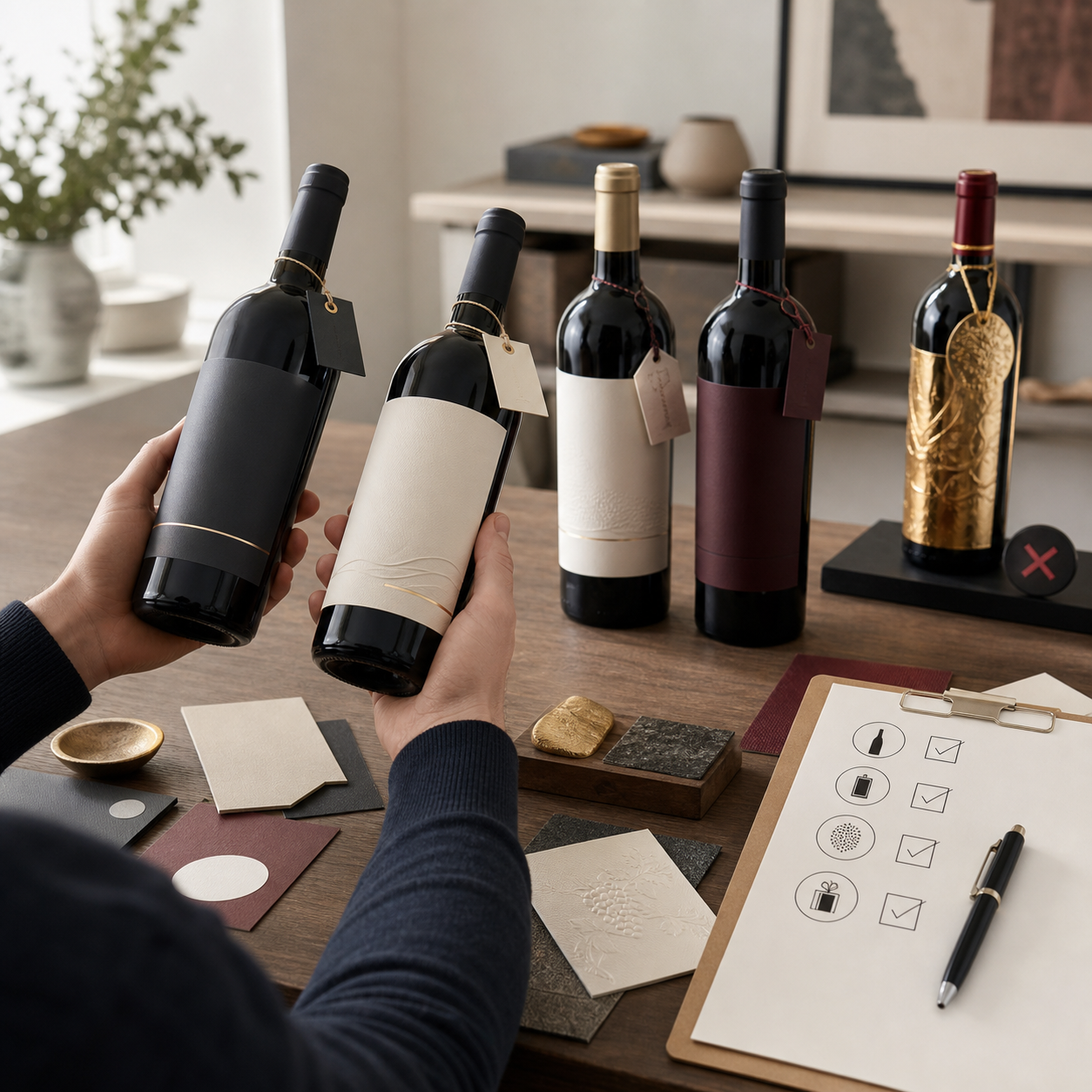
Selection Criteria: How To Choose Commercial Wine Bottle Decor That Looks Premium, Not Tacky
Selection Criteria: How To Choose Commercial Wine Bottle Decor That Looks Premium, Not Tacky
Choose Wine Bottle Decor like visual merchandising, not like a craft project. Premium displays come from repeatable formats, controlled finishes, restrained branding, and clean production across 50, 250, 1,000, or 5,000 units.
Most search results show Pinterest-style one-offs. B2B buyers need formats that scale without visible glue, mismatched bottles, cluttered labels, cheap ribbon, harsh fairy lights, or off-brand colors. The goal is not more decoration. The goal is a system that looks intentional in a real venue.
- Score every concept before production
Before collecting bottles or buying materials, score each concept against the same commercial criteria. This step keeps teams from approving ideas that look strong in one photo but fail across hundreds of units.
After scoring the concept, build a repeatable production workflow before collecting bottles at scale. Test label removal, finishing, drying, packing, and quality control on a small batch first. A concept that takes three minutes per unit can become unmanageable at 1,000 pieces.
Glass is durable and highly reusable. The U.S. EPA has historically reported millions of tons of glass entering municipal waste streams each year, which makes reuse attractive. Public venues still need breakage plans, flameless lighting, clear walkways, and safe transport.
Pros: Reduces waste, supports brand storytelling, and works well in hospitality settings.
Cons: Heavy, breakable, and labor-heavy without a workflow.
Recommendation rating: 5/5 if standardized before scaling.
- Match the finish to the venue style
A premium finish should support the room, not compete with it. Start with the venue style. Then choose the bottle color, surface treatment, branding, and lighting to match.
For a rustic vineyard, use amber or green bottles, matte labels, and clean, consistent twine. Avoid heavy burlap or mixed handmade accents.
For a luxury hotel, use clear or frosted glass, metallic accents, etched branding, and warm low-profile LEDs. Choose concealed attachment points instead of exposed glue, handwritten tags, or busy labels.
For a modern restaurant, use monochrome bottles, removed labels, and satin black, white, or smoked finishes. Mixed bottle shapes can work when the variation looks planned.
For a holiday retail display, use one tight palette, such as red and gold, winter white, or deep green. Keep ornament clusters controlled, and choose warm lighting over multicolor fairy lights.
Pros: Makes decor feel designed, not assembled.
Cons: Limits loose creative variation.
Recommendation rating: 4.5/5 for brand-led venues.
- Remove or control labels
Labels create the fastest premium-or-tacky split. Keep original labels only when the wine brand matters, such as a winery tasting-room wall or producer dinner. In most commercial settings, mixed labels add visual noise and weaken the room’s design.
For hotels, restaurants, events, and retail displays, remove labels or replace them with a controlled brand mark. A table number, menu cue, seasonal tag, or simple logo treatment can do the job. Before collecting bottles in volume, test soaking, scraping, adhesive removal, drying, and quality control.
Concrete example: A restaurant using 200 bottle vases should not mix ten label styles across dining tables. Removing labels and adding one matte black neck tag creates a cleaner room at the same bottle count.
Pros: Cleaner look, stronger brand control, and better photography.
Cons: Adds labor and drying space.
Recommendation rating: 5/5 for hotels, restaurants, and events.
- Use lighting with restraint
Lighting can make Wine Bottle Decor feel elevated when it is warm, controlled, and consistent. Fairy lights often look cheap when they are too bright, tangled, blue-white, or visible through dirty glass.
Use warm white LEDs, hidden battery packs, and consistent bottle spacing. For public venues, choose flameless candles or low-heat LEDs unless code, insurance, and supervision allow open flames. This keeps the display atmospheric while reducing glare, cord clutter, and avoidable safety issues.
Pros: Strong evening impact, reusable format, and easy atmosphere.
Cons: Battery changes, glare, cord clutter, and safety checks.
Recommendation rating: 4/5 when warm, hidden, and standardized.
- Use this B2B buyer fit matrix
The right format depends on who is buying and where the decor will live. Use this matrix to align the concept with the venue, brand, and operational limits.
Some buyers want Wine Bottle Decor to feel handmade. In commercial spaces, handmade only works when the production system is disciplined. The premium rule is simple: repeat the shape, control the finish, hide the labor.
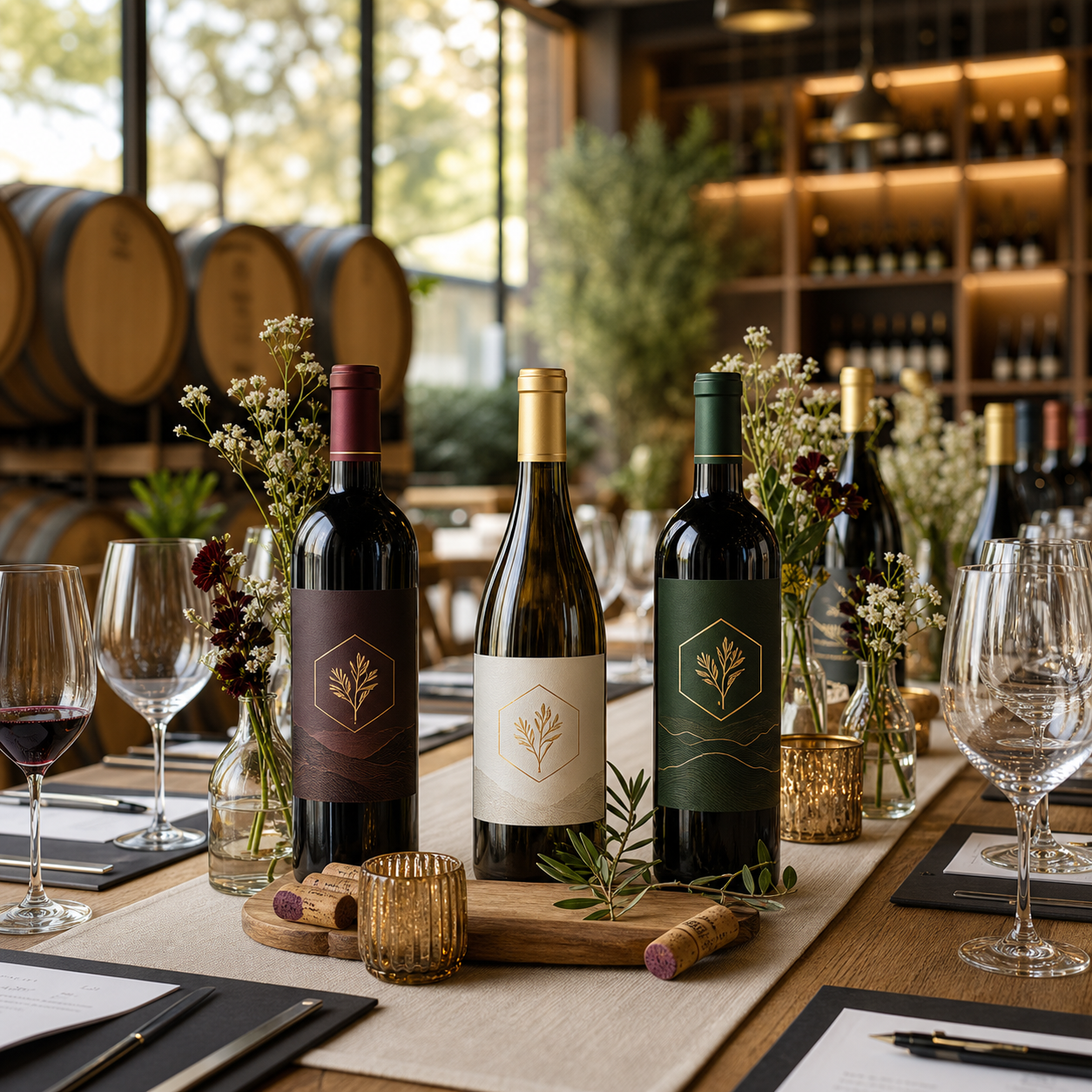
1. Branded Wine Bottle Centerpieces For Tables And Tasting Rooms
- Branded Wine Bottle Centerpieces for Tables and Tasting Rooms
Branded bottle centerpieces are the safest first Wine Bottle Decor format for commercial buyers. They look polished, suit many occasions, and scale with less risk than cut-glass projects or complex handmade displays. For wineries, restaurants, hotels, and event teams, they offer a practical balance: recognizable wine cues, moderate customization costs, and enough flexibility to refresh the look by season.
Recommendation rating: 9/10 for B2B use
Best for tasting rooms, wine dinners, hotel tables, weddings, private events, retail displays, and trade-show hospitality.
What it is: Empty, overstock, or intentionally sourced wine bottles styled as table decor with florals, greenery, candles, LED inserts, tags, ribbons, QR-code tasting cards, etching, or screen-printed logos.
Why it works: The bottle shape already signals wine, so the design needs fewer added elements. Buyers can keep the base asset and change the seasonal layer. For example, a winery can use the same matte-black bottles for Valentine’s dinners, harvest events, and holiday gift tables. The refresh comes from swapping neck tags, florals, or ribbon bands.
Pros
- Low tooling cost compared with custom molds or cut-glass work.
- Flexible design for seasonal campaigns and one-off events.
- Strong brand recall through logos, tags, ribbons, or QR cards.
- Easy refreshes with inserts, lighting, and table styling.
Cons
- Mixed labels can create visual clutter on banquet tables.
- Fresh florals require setup time and maintenance.
- Large events need table maps, packing rules, storage space, and breakage allowance.
DIY vs. outsourced: where the math changes
Community discussions around wine bottle crafts often start with the same pain point: “I have dozens or hundreds of empties. What can I do with them?” For a business, the better question is: how many paid labor hours will this consume? That shift matters because collection, cleaning, label removal, finishing, lighting, packaging, storage, and rework all add cost before the bottles reach the table.
Use this planning benchmark before quoting vendors:
*Includes collection, sorting, soaking, label removal, drying, painting or finishing, cutting if required, light insertion, tagging, packing, storage, and rework.
The hidden cost is handling. Label removal alone can take 5-15 minutes per bottle, depending on adhesive and paper stock. At 1,000 bottles, that becomes 83-250 labor hours before decoration starts. In hospitality and event environments, basic manual tasks become expensive once wages, supervision, and overtime enter the job.
Decision triggers for buyers
Outsource when any of these apply:
- Total labor exceeds 80 hours. That equals roughly two full workweeks before setup.
- You need more than 250 matching bottles. Consistent color, height, and silhouette matter on banquet tables.
- The design requires permanent branding. Etching, screen printing, sprayed finishes, and private-label packaging are usually cleaner through a supplier.
DIY still makes sense under 50-100 bottles, especially for a tasting room pilot or one private dinner. Keep the design simple: clean bottle, removed label, branded neck tag, ribbon band, and LED cork light.
For outsourced Wine Bottle Decor, ask suppliers about minimum order quantities, or MOQs, for etching, screen printing, ribbons, hang tags, inserts, and private-label cartons. Also budget 5-10% extra units for breakage, sample approval, shipping damage, and last-minute table changes. This small buffer helps prevent the most expensive outcome: a nearly finished room with mismatched centerpieces.
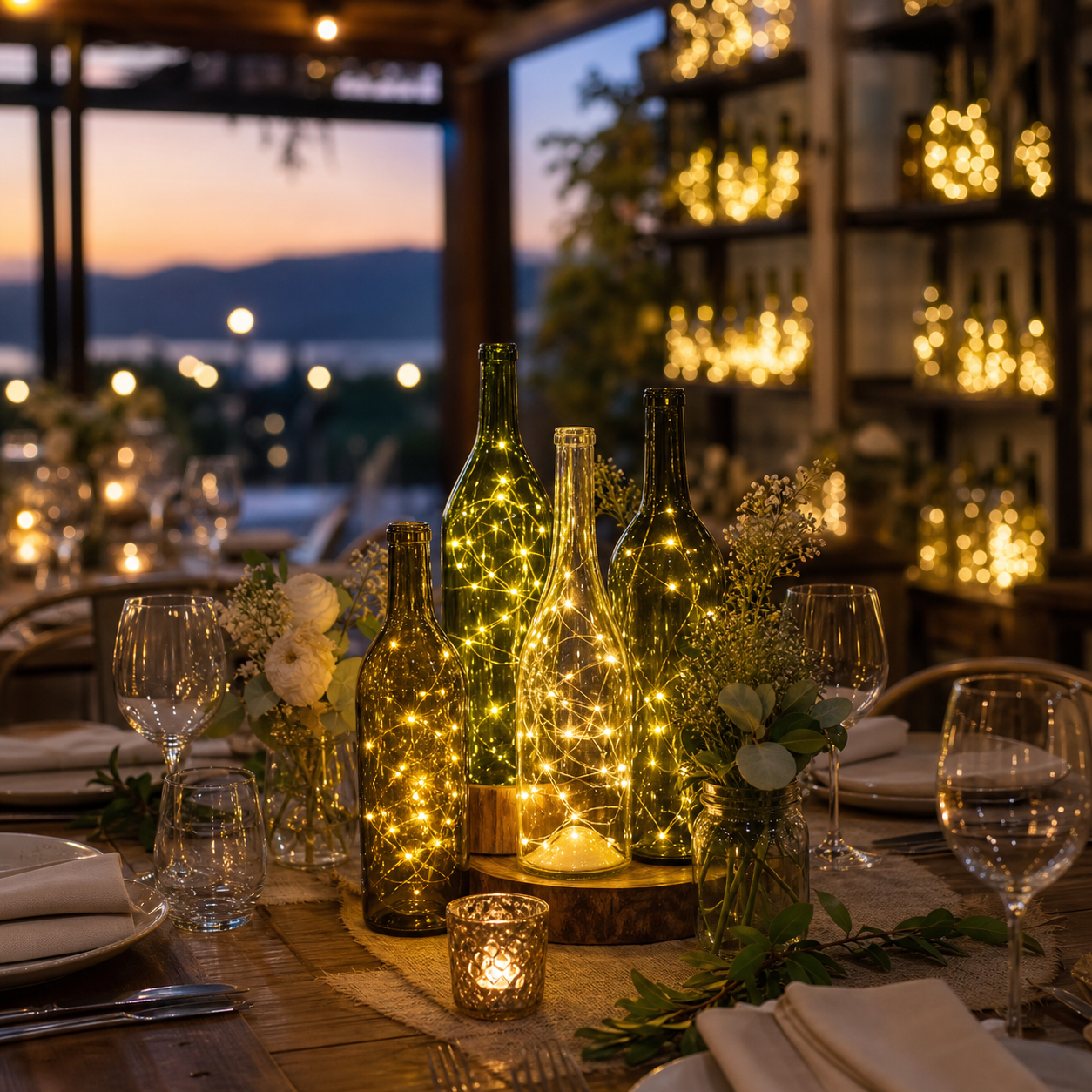
2. LED Wine Bottle Lights For Ambient Venue Decor
- LED Wine Bottle Lights for Ambient Venue Decor
LED-lit bottles are a fast, practical way to turn empty wine bottles into reusable venue decor. For wineries, the value comes from treating them as decor inventory, not a craft project. With a simple workflow, Wine Bottle Decor can support tasting rooms, patios, wedding receptions, hotel bars, restaurant shelves, and holiday retail displays.
Recommendation rating: 8.5/10
Best for: tasting rooms, patios, wedding receptions, hotel bars, restaurant shelves, holiday retail displays
Difficulty: Low to medium
Estimated cost: $2-$8 per bottle for cork lights or basic LED inserts; more for rechargeable inserts
Estimated labor: 5-10 minutes per bottle after label removal
- Use LED bottles where candles create risk or friction
Battery-powered cork lights and rechargeable LED inserts create a candlelit effect without an open flame. That matters in public-facing spaces. The International Fire Code places controls on open flames in assembly areas. Many venues also restrict candles unless they are enclosed or approved in advance.
For wineries, restaurants, and hotels, LEDs reduce approval friction while preserving a warm, low-light atmosphere. They also work well in dim rooms, where small decor details photograph cleanly for social media.
Best choice: warm white LEDs around 2200K-2700K.
Avoid: flashing multi-color LEDs unless the event is casual or nightclub-style.
Pros: safer than open flames, fast to deploy, high visual impact, strong performance in low-light settings.
Cons: batteries add operating cost; cheap LEDs can look blue or harsh; outdoor use requires waterproof-rated lights.
- Build a repeatable winery workflow
The best system starts after tastings, not right before an event. Staff can collect empty bottles, rinse them, and sort them by glass color, shape, and label condition. This turns a loose pile of empties into usable inventory for tables, shelves, signage, and retail displays.
A simple production flow:
- Collect post-tasting bottles in labeled bins: clear, green, and amber.
- Remove labels for premium displays; keep labels for branded retail props.
- Add warm white cork lights or rechargeable inserts.
- Tag each bottle by use: table marker, shelf prop, QR guide, gift display, or signage.
- Store finished bottles in divided cases by season or event type.
Clear bottles with removed labels work well for wedding table clusters. Green Bordeaux bottles can add ambient light to tasting-room shelves. Branded bottles with QR tags can support “scan-to-view tasting notes” displays.
- Turn bottles into commercial display assets
LED wine bottles work best when they scale across rooms, events, and campaigns. Use them as table clusters in private dining rooms, accent lighting on bar shelves, window display props, or ambient lighting for outdoor evening events. The same finished bottles can support guest experience and merchandising.
Strong commercial use cases include:
- Branded centerpieces for private tastings and dinners
- LED table markers with neck tags or small numbered cards
- Seasonal shelf props for harvest, winter gifting, Valentine’s Day, and wine club pickup weekends
- QR-code tasting guides tied to specific bottles or flights
- Holiday gift displays and private-event signage
Some teams worry that wine bottle decor can look tacky. That usually comes from poor finish choices: mixed bottle shapes, cool-toned LEDs, visible wires, or crowded branding. For a cleaner look, use one bottle color, one light temperature, and one message per display.
- Run quality control before every deployment
Quality control keeps LED bottle decor from looking improvised. Check each bottle before it reaches the floor, especially in guest-facing areas. Tasting rooms, patios, event tables, and retail shelves need consistent finish, stable placement, and reliable lighting.
Use this checklist before deployment:
- No cracks, chips, sticky residue, or cloudy glass
- Matching light color and brightness across the display
- Fresh batteries or fully charged inserts
- Weather-rated lights for outdoor bottles
- Stable placement on tables, shelves, or risers
For outdoor patios, use waterproof-rated lights and secure any wiring. In public venues, confirm rules for glass placement, traffic paths, and unstable displays before setup.
- Plan storage and seasonal reuse from day one
LED bottle decor breaks down when no one owns maintenance. Assign one storage zone and track inventory by use: everyday tasting room, private events, retail holidays, and seasonal merchandising. Build batteries, charging, cleaning, and replacement checks into the same process.
A winery with 120 finished bottles might keep 40 for tasting-room tables, 40 for events, and 40 for seasonal merchandising. Rotating them by quarter helps the same inventory support summer patio service, fall harvest displays, winter gift bundles, and spring wine club promotions.
That system turns the common “too many empty bottles” problem into reusable Wine Bottle Decor with clear labor, storage, and maintenance rules.
3. Painted Or Frosted Wine Bottles For Seasonal Retail Displays
- Painted or Frosted Wine Bottles for Seasonal Retail Displays
Choose painted, frosted, or matte-finished bottles when a display needs to signal a season fast. They work well for holiday gifting, fall harvest themes, Valentine’s bundles, winter tasting flights, and limited-time retail campaigns. The best Wine Bottle Decor is not selected by looks alone. Match the finish to the buyer type, venue risk, and revenue goal. That way, the display looks polished and holds up under real use.
- Best commercial fit: retailers, wineries, and hospitality brands
Recommendation rating: 4.5/5 for seasonal merchandising
Painted, frosted, and matte-finished wine bottles work best where color consistency drives shelf impact. Matte forest green bottles with gold accents read “holiday gift.” Terracotta and cream support fall harvest themes. Matte black, white, and champagne finishes suit premium winter displays. NRF reported U.S. holiday retail sales reached $964.4 billion in 2023, which shows why seasonal presentation deserves attention. For gifting tables, bundled offers, and tasting campaigns, a controlled color palette often works harder than detailed craft decoration.
- Recommended formats: window clusters, endcap props, tasting-counter risers, gift table accents
- Durability needs: medium; use dividers or sleeves to reduce chips during transport
- Customization options: brand colors, vinyl logos, seasonal tags, metallic neck bands
- Operational constraints: spray paint requires ventilation, drying space, and surface prep
- Use-case guide: match the finish to the business model
Recommendation rating: 4/5 for scalable decor
Each venue needs a different balance of visual impact, durability, and handling control. Wedding planners can use frosted bottles as table numbers or centerpieces because handling stays light. Restaurants should use painted bottles for low-touch ambient lighting, since nightly movement can chip finishes. Hotels can use matte black, white, or champagne bottles as lobby accents. Retailers should group bottles by height, color, and finish to create depth across windows, shelves, and endcaps. Corporate gifting teams can add logos or recipient names, while wineries can use seasonal colors to support tasting-room storytelling.
Before choosing a finish, run a simple handling test. If staff will touch the bottle more than 3-5 times per day, use a sealed matte coating or outsource the finishing. If the bottle is mostly visual, DIY or small-batch painted decor can work well.
- Pros, cons, and “not tacky” rules
Recommendation rating: 5/5 when kept restrained
Painted and frosted bottles offer strong visual consistency, easy brand-color matching, strong photography value, and reuse when stored properly. The trade-offs are operational. Paint can chip during transport, spray application adds labor, and every batch needs ventilation and surface prep. Glitter-heavy finishes and heavy metallic coverage can look low-end in commercial spaces. The risk increases under retail lighting or in premium hospitality settings.
For a more commercial look, favor matte black, white, champagne, terracotta, forest green, and light metallic accents. Limit the display to three variables: height, finish, and one accent color. That restraint keeps the display seasonal without making it look like a craft project.
4. Custom Labeled Or Etched Wine Bottles For Corporate Gifts And Premium Events
- Custom Labeled or Etched Wine Bottles for Corporate Gifts and Premium Events
Choose this format when the bottle needs to do more than standard decor. Custom labeled or etched Wine Bottle Decor works well for VIP gifts, sponsor assets, donor keepsakes, limited-edition campaign pieces, and premium event takeaways because it combines branding, presentation, and post-event value.
Recommendation rating: 9/10
Best for: corporate gifting, luxury weddings, winery clubs, destination conferences, donor events, executive dinners
Difficulty: Medium
Estimated cost: $6-$35+ per bottle, depending on bottle sourcing, label stock, etching, packaging, and quantity
Typical lead time: 3-8 weeks with artwork approval
- What it is and why it works
Custom Wine Bottle Decor can include etched logos, screen-printed graphics, paper labels, foil-stamped neck tags, ribbon bands, wax seals, QR codes, serialized numbering, and gift packaging. These details turn a simple bottle into a branded object. The result feels intentional, premium, and tied to a specific event or campaign.
The business case is stronger than standard decor because the bottle can become a keepsake, shelf object, photo prop, or post-event reminder. A sponsor logo on a table sign disappears after the event. A numbered etched bottle may stay in a client’s office for months, extending brand visibility beyond the event date.
This format can also support low-waste merchandising. Teams can use cleaned, upcycled bottles as reusable event assets instead of one-time props. EPA guidance notes that glass can be recycled repeatedly without loss of quality. That gives brands a credible sustainability angle when replacing disposable plastic decor with reusable or giftable glass pieces.
- Best commercial use cases
Use this format when perceived value, personalization, and brand recall matter. It fits corporate gifting, donor events, luxury weddings, winery clubs, destination conferences, and high-value client dinners. In each setting, the bottle can serve more than one role: table decor, campaign asset, guest gift, and storytelling prompt.
Strong fits include:
- Corporate gifting: etched logo, thank-you message, premium box
- High-value dinners: custom label, guest name, menu QR code
- Winery or donor events: serialized bottle, campaign mark, event date
For example, a winery club could use 250 cleaned Bordeaux bottles as harvest dinner centerpieces. Each bottle could feature a matte paper label, small etched crest, and QR code linking to the vineyard story. After dinner, guests take the bottle home, so one item supports decor, gifting, and brand storytelling.
- Pros, cons, and budget tradeoffs
Pros
- Premium perceived value
- Strong brand visibility
- Excellent fit for gifting
- Easier to justify as gifting or event spend
- Scalable through print, etching, and packaging suppliers
Cons
- Higher unit cost than DIY decor
- Minimum order quantities may apply
- Artwork files and approvals add lead time
- Over-branding can reduce elegance
A practical budget rule: choose custom labels or tags under 50 units. Consider outsourced etching or screen printing at 100+ units, where setup costs spread across more bottles. For executive gifts or sponsor pieces, packaging often matters as much as the bottle treatment. A premium box, sleeve, or note card can make the piece feel collectible instead of disposable event swag.
- Seasonal planning calendar
The main creative risk is making the bottle look too promotional. Avoid that by using one brand mark, one premium finish, and one clear message. The bottle should feel like a keepsake first and an advertisement second.
5. Wine Bottle Signage, Table Numbers, And QR-Code Displays
- Wine Bottle Signage, Table Numbers, And QR-Code Displays
Use decorated bottles as signage first and decor second. This style of Wine Bottle Decor works best when each bottle carries useful information, such as table numbers, tasting notes, QR-code menus, sponsor messages, escort cards, or directional cues. For B2B teams, the value is practical. Bottles become reusable event assets for wine dinners, pairing menus, private tastings, wedding receptions, tasting rooms, pop-up shops, and trade events.
Recommendation rating: 8/10
Best for: wine dinners, pairing menus, weddings, tasting rooms, pop-up shops, trade events
Difficulty: Easy to medium
Typical materials: clean bottles, card holders or neck tags, printed cards, QR labels, ribbon, etched logo decals
Estimated cost: $2-$12 per bottle for simple tags; $10-$35+ for etched, branded, or gift-ready versions
Production time: 5-15 minutes per bottle for simple assembly; longer for etching or premium packaging
- Why it works commercially
Wine bottle signage adds utility to decorative bottles by combining visual impact with information delivery. A restaurant can place one bottle on each table with a pairing menu on one side and a QR code to the wine list on the other. That setup replaces loose paper inserts, small acrylic stands, and extra tabletop clutter. It also keeps the presentation aligned with the venue’s brand.
The sustainability message strengthens the business case. The U.S. EPA reports that glass made up 4.2% of municipal solid waste in 2018, so reusing bottles gives brands a visible low-waste merchandising cue. For wineries, hotels, restaurants, event teams, and corporate gifting programs, one bottle can serve as signage, brand story, and reusable campaign asset.
- Pros and cons
Pros
- Combines functional signage with decorative value
- Refreshes easily with new cards, tags, QR codes, or ribbons
- Keeps material costs low, especially when using collected bottles
- Supports digital engagement through menus, tasting guides, landing pages, or RSVP forms
Cons
- Requires larger type in dim venues
- Needs secure card attachment to look polished
- Depends on consistent fonts, labels, and ribbons
Follow one simple rule: if guests need to read it from more than 3 feet away, use large table numbers or bold directional copy. Keep tasting notes, sponsor details, and longer menu content on QR-linked pages.
- How to execute it without looking handmade
Start with a consistent bottle finish. Remove old labels unless they support the theme. Then control the design with three elements: one typeface, one accent color, and one attachment method. This approach keeps the display polished across tables, tasting stations, retail shelves, and gifting setups.
Match the attachment method to the venue, budget, and campaign length. Strong options include neck tags, wire card holders, wax seals, etched logo plates, and belly bands. Premium events may call for etching or branded sleeves. Seasonal campaigns can work well with custom tags, ribbon, and printed QR labels.
- Seasonal campaign calendar
Digital signage may look cleaner in some venues, but bottle signage adds touch, context, and brand presence. It helps teams connect sustainability, storytelling, wayfinding, and information delivery in one reusable event asset. For seasonal campaigns and personalized corporate gifting, that combination gives decorated bottles a stronger commercial role than decor alone.
6. Cut Wine Bottle Vases, Planters, And Candle Holders
- Cut Wine Bottle Vases, Planters, and Candle Holders
Use cut bottles when Wine Bottle Decor needs to work as a tabletop vessel, not just a visual prop. With clean cuts and polished edges, bottles can become vases, bud holders, planters, candle covers, or hydroponic displays. This format suits boutique hospitality, winery events, premium gifting, and farm-to-table settings. It also carries the highest safety and quality-control burden in this list. Cutting glass adds labor, breakage risk, inspection steps, and potential liability. Treat it as a planned production item, not a casual DIY add-on.
Recommendation rating: 6.5/10
Best for: boutique hotels, winery dinners, farm-to-table restaurants, eco-events, premium gifting
Avoid for: crowded public venues, high-volume DIY production, children’s events, low-budget rush orders
Difficulty: High
Estimated production time: 10-25 minutes per bottle with proper tools, plus polishing and inspection
Typical cost range: Low material cost, higher labor cost; outsourcing often makes sense above 100-250 units
Core materials: matching wine bottles, glass cutter or wet saw, sanding and polishing tools, gloves, eye protection, inserts, candles, plants, flowers, tags, and packaging
Why it works: A polished cut bottle creates a higher-end upcycled look, especially when bottle shapes, heights, and colors stay consistent. The open vessel also adds practical value because it can hold flowers, herbs, taper candles, succulents, or water-rooted greenery. For wineries, eco-focused hotels, farm-to-table restaurants, and green event programs, that utility supports a stronger sustainability story than single-use decorations.
Evidence: The U.S. EPA reported that glass containers and packaging had a 31.3% recycling rate in 2018. Reusing bottles as decor cannot replace a full recycling program. It can, however, give brands a visible way to show waste reduction at the table, bar, or gift-opening moment.
Pros
- Distinctive handmade look
- Strong sustainability narrative
- Functional as a vase, planter, candle sleeve, or gift vessel
- Premium feel when edges are smooth and bottle shapes match
Cons
- High labor demand and breakage risk
- Uneven edges that can look cheap or create liability
- Limited scalability without professional cutting equipment
- Required inspection, packaging, and safe handling protocols
For commercial use, set a hard quality rule: reject any unit with chips, cracks, sharp edges, or visible wobble. DIY cutting can look cost-effective at first. After labor, rejected pieces, and liability are counted, the savings often shrink. For campaigns above a few dozen pieces, professional cutting is usually the safer and cleaner option.
Seasonal campaign calendar
A strong use case is a winery turning empty tasting-room bottles into branded bud vases for a harvest dinner. The team can add QR tags that link to the vineyard story, then reuse the vessels for Thanksgiving retail displays. That turns a simple Wine Bottle Decor piece into sustainable experiential merchandising: reusable, brandable, and tied to a seasonal campaign calendar.
7. Wine Bottle Wall Displays, Shelving Props, And Back-Bar Decor
- Wine Bottle Wall Displays, Shelving Props, And Back-Bar Decor
Use wall displays, shelving props, and back-bar bottle installations for long-term visual merchandising rather than one-night decoration. This format fits restaurants, tasting rooms, wine bars, hotels, specialty retailers, and winery shops with steady bottle supply, storage space, and staff support. In Wine Bottle Decor programs, it links everyday bottles to B2B goals: sustainability messaging, reusable event assets, branded experiences, low-waste merchandising, and seasonal campaign planning.
Recommendation rating: 8/10
Best for: tasting rooms, wine bars, hotel bars, specialty retailers, winery shops
Difficulty: Medium
Typical cost range: low when using in-house bottles; higher with shelving, lighting, etching, or branded packaging
Best decision rule: use this format when the display will stay up 30+ days or rotate seasonally.
Empty bottles can support several commercial display formats:
- Color-blocked back bars grouped by glass tone: green, amber, or clear
- Brand-history walls with old vintages, labels, awards, and tasting notes
- Seasonal shelf risers for gift packs and limited releases
- Window installations using bottles, corks, crates, barrel heads, and warm lighting
- Tasting-room storytelling zones with QR codes linking to vineyard, menu, or club pages
The strongest business case is visible sustainability. In 2018, the EPA reported 12.3 million tons of glass containers and packaging in U.S. municipal solid waste. Reusing bottles as merchandising assets helps brands show low-waste thinking in a customer-facing way. It also reduces dependence on disposable seasonal props while giving teams a reusable framework for events, gifting, retail displays, and seasonal storytelling.
Execution determines whether the display looks premium or improvised. Strong merchandising starts with clear rules: remove damaged labels, group bottles by color, leave negative space, and limit branding to one or two touchpoints. Pair bottles with corks, crates, barrel heads, tasting cards, and lighting to create a complete wine environment instead of a loose collection of empties.
Pros
- Creates high visual impact on walls, shelves, windows, and back bars
- Extends reuse compared with disposable seasonal props
- Supports brand storytelling and sustainability messaging
- Works with existing venue architecture
- Pairs well with corks, crates, barrel heads, tasting cards, and lighting
Cons
- Requires regular dusting on open shelving
- Needs shelf lips, rails, or secure brackets to reduce breakage risk
- Can look cluttered when bottle groupings are too dense
- Requires staff resets after tastings, events, and retail traffic
Seasonal campaign calendar
The best use of this format is sustainable experiential merchandising. One set of upcycled bottles can support events, gifting, retail displays, and seasonal campaigns throughout the year. For B2B teams, the value is not the bottle alone. It is the ability to turn existing materials into branded spaces that feel planned, reusable, and commercially relevant.
8. Bulk Upcycled Wine Bottle Decor Kits For Events And Resale
- Bulk Upcycled Wine Bottle Decor Kits For Events And Resale
Use bulk kits when you have 50+ bottles to decorate, sell, rent, or place across multiple events. At that volume, Wine Bottle Decor becomes repeatable inventory, not a one-off craft project. Kits help wineries, retailers, planners, venues, and gifting teams lock in the look, materials, packaging, and setup process before labor costs rise. They also reduce last-minute decisions, which keeps production cleaner and makes finished bottles easier to price, display, and reorder.
Recommendation rating: 8.7/10
Best for: wineries, retailers, wedding planners, hotels, restaurants, corporate gifting teams
Difficulty: Low to medium
Typical kit cost range: $6-$25 per unit, depending on lighting, packaging, etching, florals, and labor
Best decision rule: build kits in batches when labor drops below 10-15 minutes per finished bottle
- What goes in a commercial decor kit
A strong kit standardizes the parts staff would otherwise select from scratch. Common components include cleaned bottles in matched colors or shapes, LED cork lights or bottle inserts, and custom tags, QR cards, table numbers, or tasting notes. Many kits also include florals, ribbons, twine, wax seals, seasonal picks, protective dividers, gift boxes, and setup instructions. The goal is to make each bottle feel designed, while keeping assembly simple enough for repeat production.
That consistency protects margin. When every bottle requires a new design decision, training slows and resale becomes harder. A fixed kit format gives staff a repeatable workflow and gives buyers a product that looks intentional across tables, shelves, gift boxes, or event displays. It also helps teams spot material gaps early, before missing tags, lights, or packaging delay fulfillment.
- Why kits work for events and resale
Bulk kits fit a broader B2B trend: sustainable experiential merchandising. Brands want event assets that tell a story, photograph well, reduce waste, and carry the message beyond the event itself. Upcycled Wine Bottle Decor supports that goal because it turns discarded packaging into branded, reusable decor. For wineries, venues, and retailers, the appeal is practical as well as visual: one kit can support event styling, gifting, and retail display.
The sustainability angle has evidence behind it. The EPA reported that only 31.3% of glass containers and packaging were recycled in 2018. Upcycled bottle decor gives businesses a visible way to show reuse rather than relying on a sustainability claim alone. For example, a winery could package 200 cleaned bottles with warm LED inserts, harvest tags, QR codes linking to tasting notes, and kraft gift boxes. The same kit structure could support tasting-room retail, club-member gifts, and fall event centerpieces.
- Revenue paths
Bulk kits can shift from event expense to sellable inventory when the design is fixed and materials are pre-packed. Businesses can use them for:
- DIY workshop nights: sell seats plus optional take-home kits
- Holiday decor bundles: build Valentine’s, Christmas, New Year’s, and harvest collections
- Tasting-room retail: connect branded decor to seasonal releases or gift sets
- Private event rentals: offer table numbers, aisle markers, and bar accents
Handmade decor can look difficult to manage at commercial volume. The economics improve when staff repeat one workflow, materials stay consistent, and each finished bottle fits a clear use case. This is where kit design matters most: it turns creative work into a product system that sales, events, and operations teams can all support.
- Seasonal campaign calendar
- Pros and cons
Pros
- Scales across events, stores, and gifting programs
- Simplifies staff training
- Supports inventory control and repeat purchasing
- Creates sellable or rentable assets
- Reduces one-off design decisions
Cons
- Requires upfront system design
- Takes storage space for packaging and finished kits
- Depends on steady bottle supply by shape, color, and label condition
- Needs quality checks for premium finishes before shipping
Best fit: businesses that want Wine Bottle Decor to support brand storytelling, low-waste merchandising, and seasonal campaign planning in one repeatable format.
Real-World Wine Bottle Decor Challenges And Solutions
Real-World Wine Bottle Decor Challenges and Solutions
The challenge is not finding Wine Bottle Decor ideas. The challenge is building a repeatable process for cleaning, sorting, design control, storage, safety, and campaign timing. Without that system, “a ton of bottles” becomes back-room clutter fast.
For B2B teams, upcycled bottles work best as sustainable experiential merchandising. They can support events, gifting, seasonal displays, and brand storytelling. The key is to manage bottles as reusable assets, not one-off craft materials.
- Bottle Volume Creates Clutter Unless You Sort First
Recommendation rating: 9/10 for wineries, restaurants, hotels, and event planners with steady bottle flow.
Many teams collect bottles because the material feels “free.” The real cost is handling. The EPA reports that glass made up 4.2% of U.S. municipal solid waste in 2018. Glass containers had a recycling rate of about 31.3%. Reusing bottles can support sustainability messaging, but the operation has to stay organized.
Start by sorting bottles before assigning design work:
- Height: tall Bordeaux, sloped Burgundy, short sparkling
- Color: clear, green, amber
- Shape: shoulder style, punt depth, neck length
- Label status: intact, removable, fully stripped
Pros: Better consistency, easier batching, cleaner displays.
Cons: Requires storage bins, staff time, and rejection rules.
Decision rule: If a bottle does not fit an assigned format within 30 seconds, recycle it.
- Label Removal Takes Longer Than Expected
Recommendation rating: 8/10 when labor is available or bottle volume is high.
Community discussions often start with the same problem: “I have too many bottles and don’t know what to do with them.” For commercial teams, the first bottleneck is usually label removal. Some labels slide off after soaking. Others leave adhesive that can take several minutes per bottle.
Protect labor time with a simple batch process:
- Sort bottles by label type before soaking.
- Soak each batch for 30-60 minutes.
- Test removal with a plastic scraper.
- Reject bottles with residue that takes more than 3-5 minutes to clean.
Pros: Low material cost, strong upcycling story, flexible inventory.
Cons: Labor can exceed the value of the decor.
Best fix: Keep premium bottles with attractive original labels for branded wine displays. Use fully stripped bottles for lights, tags, etched logos, or clean campaign designs.
- Mixed Bottles Can Look Tacky Without Design Rules
Recommendation rating: 9/10 for customer-facing spaces.
Wine Bottle Decor fails when every bottle has a different ribbon, paint color, tag, and light strand. Premium commercial decor needs restraint. A clear design system turns mixed inventory into a branded display instead of a craft-table collection.
Use a three-part design rule:
- Limit the palette to two main colors plus one accent
- Match finishes to the venue tier, such as matte black, frosted glass, metallic foil, kraft paper, or linen ribbon
- Remove visual noise, including torn labels, glue marks, cheap glitter, and harsh LEDs
Concrete example: For a hotel wine dinner, use amber bottles with warm micro-LEDs, black table numbers, and small QR tags linking to the tasting menu. That feels intentional. Random bottles with multicolor lights feel like leftover party supplies.
Pros: Higher perceived value, stronger brand control, better photos.
Cons: Fewer bottle types qualify, and customization must be standardized.
- Transport Breakage Needs a Built-In Overage Plan
Recommendation rating: 8.5/10 for events, weddings, and pop-ups.
Glass can chip during loading, unloading, and reset. Plan decor counts with breakage in mind, especially when bottles are painted, etched, or fitted with lighting. A simple packing system protects the display and reduces event-day substitutions.
Use practical transport materials that crews can pack and unpack quickly:
- Original wine case boxes with dividers
- Foam sleeves for etched or painted bottles
- Milk crates or catering crates for local event transport
Build a 5%-10% overage allowance into each event plan. For 200 table bottles, prepare 210-220 units. The extra inventory protects the event team from last-minute gaps.
Pros: Fewer event-day failures, faster setup, safer handling.
Cons: More storage, more upfront production, more return logistics.
- Seasonal Campaigns Need Lead Times, Not Last-Minute Crafting
Recommendation rating: 10/10 for brands using bottles in merchandising, gifting, or events.
Decorated bottles work best when they follow a campaign calendar. Some teams treat wine bottle decor as too small to plan. A reusable bottle system can carry sustainability claims, QR campaigns, sponsor messages, and personalized gifting across the year.
Treat Wine Bottle Decor as a planned asset, not an afterthought. The strongest programs connect low-waste merchandising, branded experiences, and reusable event inventory in one practical system.
DIY vs. Outsourced Wine Bottle Decor: Cost, Labor, And Scalability Comparison
DIY vs. Outsourced Wine Bottle Decor: Cost, Labor, And Scalability Comparison
DIY works best for small, low-risk, rustic Wine Bottle Decor projects. Outsourcing becomes the stronger choice when you need consistent branding, safe finishes, premium packaging, or a fixed event deadline. The right decision depends on volume, labor capacity, finish quality, and how visible the decor will be to customers or guests.
-
Use DIY for batches under 50 bottles
Best fit: tasting-room tests, small dinners, workshop experiences, rustic centerpieces, and low-risk seasonal props.
Recommendation rating: 8/10 for small batches; 4/10 for branded volume.DIY is practical when the design can tolerate variation. Twine wraps, simple tags, dried florals, table numbers, chalk-paint finishes, and LED bottle lights work well at this scale. These projects support handmade brand stories without requiring specialized finishing, strict quality control, or complex fulfillment.
Labor math matters. If internal labor costs $20 per hour and each bottle takes 12 minutes, labor alone is about $4 per bottle. That figure excludes cleaning supplies, paint, gloves, drying racks, rejected bottles, packaging, transport, batteries, florals, storage, management time, and post-event cleaning.
Pros
- Low upfront cost
- Fast concept testing
- Strong fit for rustic or handmade brand stories
Cons
- Inconsistent finish quality
- Staff time rises as volume grows
- Higher risk around deadlines, storage, and breakage
Many projects start with a practical question: “We have dozens of empty bottles. What can we do with them?” For a winery, restaurant, or event team, the best answer is to test the idea in-house first. Measure time per bottle before turning the concept into a larger campaign.
-
Review labor cost at 50-250 bottles
Best fit: wedding planners, restaurants, hotels, and wineries planning one campaign or event.
Recommendation rating: 6.5/10 for DIY; 7.5/10 for hybrid production.At this range, DIY needs a clear workflow. Assign one team to cleaning and label removal, one to finishing, and one to packing. Without that structure, a simple Wine Bottle Decor project can pull staff away from service, event setup, or customer-facing work.
Use this scale rule:
- Under 50 bottles: manageable in-house
- 50-250 bottles: plan staff, drying space, and storage
- 250-1,000 bottles: run a labor-cost review
- 1,000+ bottles: outsource or build a dedicated production workflow
DIY can still make sense at 50-250 bottles, especially for rustic centerpieces or one-time events. The savings narrow once you add rejected bottles, management time, transport, packaging, and post-event cleaning. At this point, many teams benefit from a hybrid model. Prototype internally, then outsource the most time-sensitive or brand-critical finishing steps.
-
Outsource when branding, safety, or deadlines matter
Best fit: corporate gifts, hotel events, premium weddings, sponsor activations, and retail campaigns.
Recommendation rating: 9/10 for 250+ branded units.Outsourcing is the better choice for etched logos, high-volume painting, professional glass cutting, premium gift packaging, and decor used in high-liability public environments. These formats need consistent finish quality, safer handling, and dependable fulfillment. They also carry higher brand visibility. Uneven paint, rough cuts, or late delivery can weaken the campaign and reflect poorly on the brand.
A corporate gifting team, for example, may need 500 upcycled bottles with etched logos, QR codes, ribbon, custom tags, and boxed packaging. DIY may reduce vendor fees, but it can create uneven branding and fulfillment delays. For public-facing campaigns, the stronger question is not “Can we make this?” It is “Can we make this consistently, safely, and on time?”
The sustainability case improves when bottles become reusable assets. The U.S. EPA’s waste hierarchy places source reduction and reuse above recycling. EPA data also shows glass represented about 12.3 million tons of municipal solid waste in 2018. Reusing bottles for merchandising turns waste reduction into a visible brand message.
-
Plan Wine Bottle Decor like sustainable experiential merchandising
Decorated bottles can do more than fill tables. They can support low-waste merchandising, branded experiences, reusable event assets, and personalized corporate gifting. For B2B teams, this shifts Wine Bottle Decor from a craft task to a campaign planning decision.
DIY supports the first prototype. Outsourcing turns that prototype into a reliable campaign asset. Use the calendar below to plan lead times, match decor concepts to seasonal demand, and decide when customization needs professional production.
The practical decision is simple: use DIY when speed, experimentation, and handmade character matter most. Move to outsourced production when the decor must deliver brand consistency, safer handling, premium presentation, and reliable deadlines at scale.
Wine Bottle Decor Comparison Table
Use this table to separate good-looking inspiration from Wine Bottle Decor that can perform in production. For B2B buyers, the strongest option fits the campaign goal, labor capacity, safety requirements, and reuse plan. Photo appeal matters, but operational fit determines whether a concept works for events, retail displays, gifting programs, or seasonal campaigns. Before production begins, compare each option by cost, scalability, customization range, and risk.
*Costs vary by region, labor rate, supplier MOQ, finish complexity, packaging, and bottle sourcing. Handmade decor works for small batches and one-off displays. Outsourced finishing becomes more practical when teams need consistent output across hundreds of units.
The commercial value of Wine Bottle Decor extends beyond the finished display. Decorated bottles can support sustainable experiential merchandising by turning used bottles into branded, reusable assets. Deloitte’s 2024 Gen Z and Millennial Survey found that many younger buyers consider environmental impact in purchasing decisions. For wineries, hotels, event teams, and corporate gifting programs, upcycled bottles create a visible sustainability story. They also support seasonal merchandising, personalized gifting, and low-waste campaign planning.
Use the campaign calendar below to plan lead times before design, sourcing, and production start. Short-run seasonal displays may only need a few weeks, while weddings, corporate gifts, and holiday sets often require more time. The best concepts pair a clear display purpose with simple customization. That keeps production manageable and helps buyers reuse bottles across events, retail campaigns, and gifting programs.
Seasonal campaign calendar:
FAQ: Wine Bottle Decor For Commercial Spaces And Events
FAQ: Wine Bottle Decor for Commercial Spaces and Events
Use Wine Bottle Decor as a campaign asset, not a craft project. It works best when it supports sustainability messaging, branded guest experiences, seasonal merchandising, or corporate gifting.
The business case is easy to understand. The EPA reports that containers and packaging make up about 28% of U.S. municipal solid waste. Reusing bottles for displays, gifts, and events gives brands a visible low-waste story customers can recognize at a glance.
-
Is wine bottle decor tacky?
Short answer: It looks tacky when it feels random. It looks premium when the design is controlled.
The concern is simple: “Will this look like a cheap DIY project?” That risk comes from mismatched bottles, loud glitter, visible glue, cluttered labels, and harsh lighting. Commercial displays need restraint, consistency, and a clear connection to the brand, venue, or campaign.
Use this premium checklist:
- Keep bottle shapes consistent within each display.
- Use restrained palettes, such as black, white, amber, gold, forest green, and matte neutrals.
- Choose clean labels, etched logos, linen tags, ribbon, or warm LEDs.
- Match the finish to the setting: rustic, luxury, modern, seasonal, or winery-led.
Pros: Low cost, reusable, strong sustainability cue.
Cons: Poor execution can look homemade quickly.
Recommendation rating: 8/10 when designed as visual merchandising. -
How do you remove labels from wine bottles at scale?
Short answer: Batch the process, test the adhesive, and reject bottles that take too long.
Label removal works best as a controlled production step, not a one-bottle task. Start by sorting bottles by shape and label type. Soak each batch in warm water with mild detergent. Then test one bottle before assigning staff time to the full group.
A practical workflow is:
- Sort bottles by shape and label type.
- Soak in warm water with mild detergent.
- Test one bottle from each batch.
- Scrape with plastic blades.
- Remove residue with citrus cleaner or isopropyl alcohol.
- Dry fully before painting, etching, or packing.
Set a hard cutoff. If one bottle takes more than 5-7 minutes of hands-on cleaning, reuse may cost more than buying clean stock or outsourcing prep.
Pros: Cuts waste and material spend.
Cons: Labor can erase the savings.
Recommendation rating: 7/10 for small batches; 5/10 for hundreds without dedicated staff time. -
Is it safe to use wine bottles with candles or lights in public venues?
Short answer: Use LEDs first. Treat open flames as a venue compliance issue.
Battery LED cork lights, puck lights, and warm micro-LED strands are safer choices for tasting rooms, hotel bars, weddings, and retail displays. They also reduce setup work because staff do not need to monitor flame, wax, or heat.
Before using candles, check:
- Venue rules
- Local fire requirements
- Table stability
- Guest traffic patterns
- Alcohol service areas
In high-traffic or alcohol-focused settings, standardize on warm LEDs. The display still creates atmosphere, with fewer safety concerns and less staff supervision.
Pros: LEDs are reusable, low-heat, and easy to standardize.
Cons: Cheap LEDs can look harsh or fail during events.
Recommendation rating: 9/10 for LEDs; 4/10 for open flames in public venues. -
What is the best wine bottle decor idea for a winery?
Short answer: Choose reusable branded centerpieces and QR-code tasting displays.
Wineries get the most value from decor that works across tasting rooms, club events, weddings, harvest weekends, and retail shelves. A frosted bottle with an etched logo, warm LED insert, neck tag, and QR code can serve several goals. It can direct guests to tasting notes, wine club signup, private event booking, or a seasonal bundle.
Best winery formats:
- Branded table centerpieces
- LED table markers
- QR-code tasting displays
- Seasonal retail props
- Bulk decor kits for event teams
Pros: Supports sales, storytelling, and repeat event use.
Cons: Requires brand control and storage.
Recommendation rating: 9/10 for wineries with regular events. -
When should a business outsource wine bottle decor?
Short answer: Outsource when consistency, safety, speed, or premium finish matters more than unit cost.
DIY can work for small rustic displays. Outsourcing fits larger campaigns, corporate gifting, etched logos, uniform painting, modified glass, tight timelines, and premium packaging. It also protects staff time when the project must look consistent across locations, tables, or gift recipients.
Use this decision rule: if you need 100+ matching bottles, a delivery deadline under 3 weeks, or branded gifts for VIPs, get quotes from a decorator, printer, etcher, or packaging vendor.
Pros: Better consistency, fewer staff hours, cleaner branding.
Cons: Higher minimums, shipping risk, less last-minute flexibility.
Recommendation rating: 8.5/10 for commercial campaigns. -
How should businesses plan seasonal wine bottle decor campaigns?
Short answer: Build a reusable annual calendar so each bottle can support more than one campaign.
Seasonal planning turns Wine Bottle Decor into reusable merchandising inventory. Instead of building one-off displays, brands can plan bottle formats, tags, lighting, ribbons, QR codes, and packaging around the full campaign year. Starting earlier makes it easier to secure consistent bottles, approve artwork, and schedule production.
Pros: Turns decor into reusable merchandising inventory.
Cons: Late planning limits customization choices.
Recommendation rating: 9/10 for brands running seasonal events or gifting programs.
Conclusion
Wine Bottle Decor can be a smart, reusable asset for hospitality brands when planned as a repeatable merchandising system rather than a one-off DIY project. The best designs align with the brand, store efficiently, meet public-space safety needs, and stay practical at the required quantity.
To move from concept to rollout, choose one or two formats based on buyer type and venue risk. Then produce a small pilot batch before scaling. For projects involving hundreds of units, uniform finishes, glass cutting, premium branding, or fixed event deadlines, compare in-house labor with outsourced production before committing.